
Delightful experiences
Barcelona Delightful
Barcelona is a wonderful unique city that makes possible what seems impossible for any other city; it is vibrant and cosmopolitan but, at the same time, chill with a pace that suggests holidays. It is a city of vanguard where universal trends converge, but also where they are born and rise for the world to follow.
Top chefs and restaurants, top painters, top football teams, top designers, etc, definitely Barcelona is a rare jewel you will not forget, and you will discover it all to its very core.
Route
-Music Palace
-Old town
-The harbour
-Parq Guell
-Paseo de gracia
-Spa
-Wine and cava penedés región
-Sagrada Familia
-Gaudí’s Casa Batlló
-Olympic ville
-Montjuich Mountain
-Montserrat Mountain
-Picasso Museum
-Girona City
-Museum of Dalí
Included
-Accommodation
-Transfers
-Breakfasts
-Lunches
-Dinners
-Private guide
Optionals
-Barça experience
-La Roca Village
Derpartures
-Barcelona
-Madrid
Day 1
As soon as you land on Spanish ground we’ll take care of you. We will be waiting for you at the airport to take you to the Hotel in a comfortable, luxurious and comfortable VAN, with a private driver, and from this moment on, that is how you’ll move to all of the sights and visits, of course also, with the company of your local Host, María Elena, that will make sure to provide everything you may be needing in your holidays.
María Elena Bracho. It will be my pleasure to meet you, and be there to support you in your vacations. I’ve been working for more than 25 years in customer service, and for 3 years as a Tour Guide. I really enjoy sharing the treasures of Spain and also human interactions, especially with people from all around the world, so I’ll gladly do everything I can, to make your experience, unforgettable.
To start with, Maria Elena will give you the first best advices, will inform you about your week and everything that is programmed and more practical info on how to move smoothly in Barcelona, around the old quarter, the area where your hotel is, etc. You will also get a map of the city and will receive some other surprises, to start making your journey unforgettable.
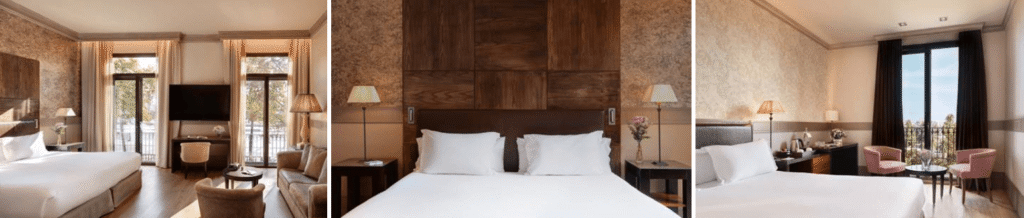
Arrival and free time to settle in the Hotel. Get comfortable in the cousy, relaxing, elegant room of your Hotel. We have a special selection of centric, beautiful 4 star Hotels, so that you enjoy top high standard services. Chill in your bed, unpack, take a warm shower, and relax before starting the visits.
Guided walking tour through the old quarter to the Palace of Music. Since you’ll be so perfectly located, you’ll be just a walking distance away from most of the nicest and emblematic sights of Barcelona. In this, your first walk, you will experience history the best way possible, by walking through the buildings and monuments that give testimony of the past, along with the stories that your local Guide will be explaining.
Rising at the heart of the Gothic Quarter, the Cathedral of Barcelona is a breathtaking testament to the city’s medieval soul. Its construction began in the 13th century and stretched across two centuries, blending Romanesque foundations with soaring Gothic spires and a neogothic façade added in the 19th century. Dedicated to Saint Eulalia, Barcelona’s young patron saint martyred under Roman rule, the cathedral holds her crypt beneath the high altar — a silent sanctuary of devotion and endurance.
Step inside and the centuries unfurl around you: cloistered courtyards filled with orange trees and white geese, ribbed vaults soaring above flickering candles, and stained glass filtering the Mediterranean sun into soft jewel tones. From the rooftop, the panorama of the old city unfolds — terracotta rooftops and distant sea — a timeless reminder of how faith, art, and architecture intertwined to shape Barcelona’s identity.
Plaça Sant Jaume has been the political pulse of Barcelona for over two thousand years. Once the site of the Roman Forum of Barcino, today it stands as the seat of both the City Hall and the Palau de la Generalitat — where Catalonia’s government convenes. The square has witnessed the city’s most defining moments: royal processions, civic celebrations, protests, and the enduring dialogue between power and people.
Visitors standing here can feel the layers of history beneath their feet — from the Roman stones hidden underground to the Gothic and Neoclassical façades facing each other across the square. It’s a place where governance meets grandeur, where every balcony and window seems to echo with centuries of voices shaping Barcelona’s destiny.
Santa Maria del Mar
Often called the “Cathedral of the Sea,” Santa Maria del Mar embodies the devotion and determination of the medieval citizens of Barcelona’s Ribera district. Built entirely by local craftsmen and merchants between 1329 and 1383, its pure Catalan Gothic architecture reflects the strength and unity of the people who carried each stone from Montjuïc to the sea.
Inside, the soaring columns and luminous stained glass create an atmosphere of solemn majesty and lightness — a sanctuary for sailors and traders seeking divine protection. Despite fires, earthquakes, and bombings, Santa Maria del Mar endures as a living symbol of the city’s resilience and the profound link between faith and community in Barcelona’s maritime past.
Pont del Bisbe (Bishop’s Bridge)
The Bishop’s Bridge is one of Barcelona’s most photographed secrets — a neo-Gothic passage connecting the Palau de la Generalitat with the Casa dels Canonges along Carrer del Bisbe. Although it appears medieval, the bridge was built in 1928 as part of the city’s Gothic Revival movement, designed to weave modern romanticism into the historic fabric of the old town.
Its ornate arches, carved skull motifs, and mysterious symbolism make it a favorite of photographers and storytellers alike. Standing beneath it feels like stepping into a film set — a fusion of myth and history where the city’s past and imagination meet in perfect harmony.
Temple of Augustus
Hidden within the narrow alleys of the Gothic Quarter lies one of Barcelona’s oldest treasures — the Roman Temple of Augustus. Dating back to the 1st century BCE, it once stood at the highest point of the ancient colony of Barcino, dedicated to Emperor Augustus as a symbol of imperial power and divine protection.
Today, four monumental columns remain, silently anchoring the city’s origins amid the labyrinth of medieval streets. Standing in their shadow, visitors sense how seamlessly Barcelona’s Roman, Gothic, and modern identities coexist — layers of time preserved within a single stone sanctuary.
Plaça Sant Felip Neri
Tucked behind the Gothic Quarter’s labyrinthine streets, Plaça Sant Felip Neri is one of Barcelona’s most poignant corners. The baroque church that gives the square its name still bears the scars of the Spanish Civil War, its walls marked by shrapnel from a 1938 bombing.
Yet, this quiet square, with its central fountain and worn cobblestones, radiates serenity and reflection. It’s a place of silence amid the city’s noise — a living memorial to resilience, peace, and the quiet beauty that emerges after tragedy.
The Kiss Mural
Created by Catalan photographer Joan Fontcuberta in 2014, El Mural del Beso is one of Barcelona’s most contemporary symbols of love and freedom. At first glance, it shows two lips meeting in a passionate kiss — but step closer, and you’ll discover that the image is made of thousands of small photographs submitted by citizens, each representing a “moment of freedom.”
Installed near Plaça d’Isidre Nonell, the mural unites art and emotion, personal and collective memory — a modern mosaic of intimacy that reflects the open spirit of the city itself. It’s a quiet yet powerful reminder that love, like Barcelona, thrives in diversity.
King’s Square
Once the ceremonial heart of medieval Barcelona, Plaça del Rei remains one of the city’s best-preserved Gothic ensembles. Here stood the royal palace of the Counts of Barcelona — later the residence of the Kings of Aragon — surrounded by elegant Gothic arcades and the soaring tower of King Martí.
Walking across its stone pavement feels like stepping back to the 14th century, when knights, merchants, and courtiers gathered for royal audiences and festivities. Today, it’s home to the Museu d’Història de Barcelona, where visitors can descend beneath the square to explore the Roman ruins that first gave rise to this magnificent court.
Plaza Real
Tucked beside La Rambla, Plaça Reial (“Royal Square”) is one of Barcelona’s most atmospheric enclaves — a neoclassical jewel that still breathes the charm of 19th-century grandeur. Designed in 1848 by architect Francesc Daniel Molina, it was conceived to celebrate King Ferdinand VII and the spirit of civic renewal following Barcelona’s industrial expansion. Once home to aristocratic gatherings, artists, and merchants, the square remains a living theatre of Catalan history: its elegant arcades, ochre façades and palm-lined symmetry evoke the romantic age when the city looked to Paris for inspiration. Even today, the twin lanterns that illuminate its colonnades — early works by the young Antoni Gaudí — whisper of an era when design and symbolism began to merge in Barcelona’s public spaces.
By day, the square resonates with soft Mediterranean light, jazz musicians and café culture; by night, it transforms into an intimate stage framed by wrought-iron balconies and flickering lamps. Around its periphery stand some of the city’s most enduring restaurants and cocktail bars, where locals and travelers gather beneath century-old palms to savor seafood tapas or cava. To stroll through Plaça Reial is to trace the city’s layered identity — royal and rebellious, stately yet effortlessly bohemian — and to feel, even for a moment, the timeless heartbeat of old Barcelona.
Las Ramblas del Born
Flowing through the vibrant El Born district, this lively promenade was once a medieval jousting field and later transformed into a boulevard of artisans, cafés, and boutiques. Today, Las Ramblas del Born captures the essence of modern Barcelona — creative, social, and effortlessly elegant.
Surrounded by historic buildings and shaded by plane trees, it’s where locals gather for vermouth, where street performers bring the past to life, and where the energy of the city seems to pulse with artistic rhythm. From sunrise breakfasts to midnight strolls, the Born’s Ramblas invite you to savor Barcelona’s contemporary bohemian soul.
Visit at the Catalan Palace of Music (Guided tour and private solo of piano).
The walking tour will end at the Catalan Palace of Music. There, you’ll have your first encounter with the modernist side of Barcelona. The Palau de la Música Catalana is a jewel of Catalan modernism, designed by Lluís Domènech i Montaner, declared a World Heritage Site by UNESCO. Its mosaic and sculpted façade pays homage to Catalan culture and the power of music. Inside, natural light filters through the polychrome glass dome, creating an almost heavenly atmosphere. Attending a private piano concert here, is an intimate experience where each note vibrates, between marble columns and glass flowers, making you feel like you are part of Barcelona’s musical history.
*Free time. Don’t leave the Old quarter without flavoring it at your own pace, have some free time to rediscover it, wandering around. You’ll find in every corner a piece of history and, at the end of every street, a cozy antique square.
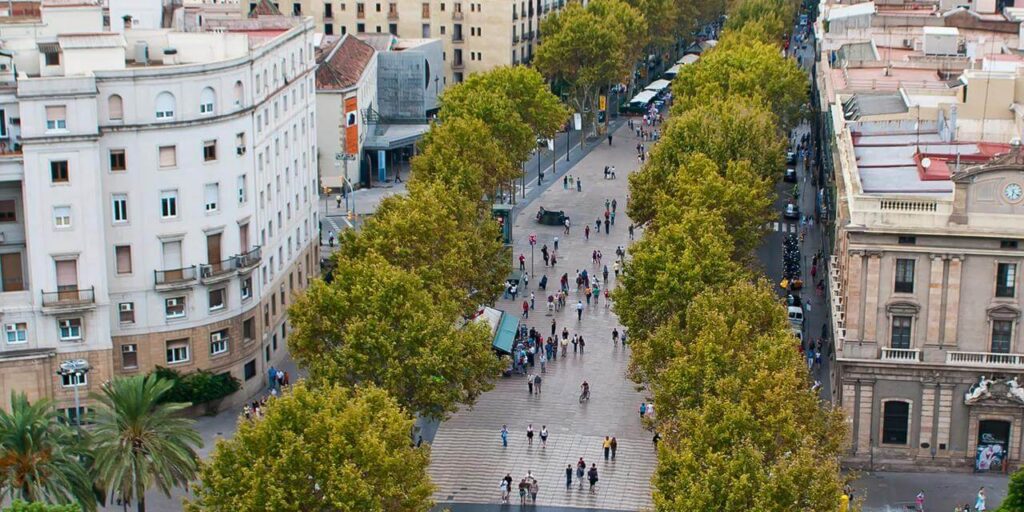
Ramblas
Your Tour Guide will meet you, to walk down with you the famous “Ramblas” until you get to your Restaurant for lunch. At the heart of Barcelona’s famous boulevard, this colorful stretch — known as Las Ramblas de les Flors — has blossomed with fragrance and beauty since the 19th century. Once the only open-air flower market in the city, it became a beloved ritual for Barcelonians to buy blooms for loved ones before evening strolls.
Even today, amid tourists and performers, the flower stalls preserve a fragment of old Barcelona: vibrant petals against the backdrop of Gothic façades and laughter from nearby cafés. It’s the living proof that, despite time and change, beauty still blooms on the city’s most iconic street.
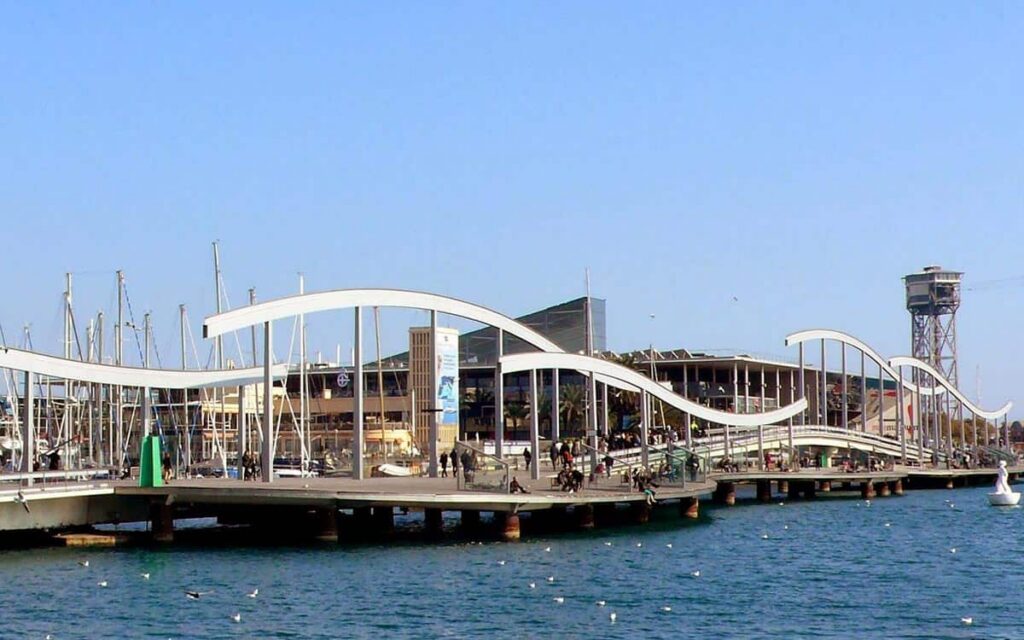
MareMagnum
Inside MareMagnum is where your restaurant will be. Perched at the edge of Port Vell, Maremagnum is where the old city meets the sea — a sleek, modern complex of restaurants, terraces, and boutiques surrounded by the blue shimmer of the Mediterranean. Built for the 1992 Olympic renaissance, it represents the city’s rebirth as a cosmopolitan maritime hub.
More than a shopping and dining destination, Maremagnum offers one of the most enchanting sunset views in Barcelona. Watching the yachts drift in the harbor while the skyline glows behind Montjuïc, one senses the perfect synthesis of the city’s spirit: historic, hedonistic, and eternally drawn to the sea.
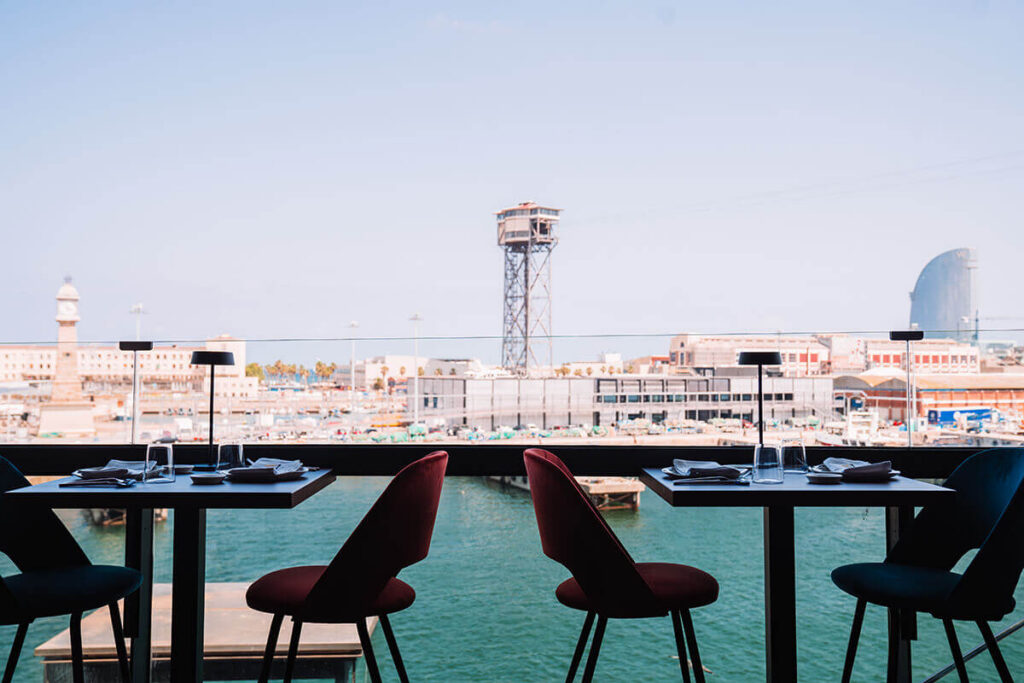
Casa Amàlia Restaurant at Maremagnum.
Located on the seafront, Casa Amàlia combines the freshness of Mediterranean produce with Catalan tradition. Its open kitchen and sophisticated atmosphere make every dish a complete sensory experience. You will have from your table, the wonderful views of the port, that will seem even more captivating, especially because you’ll find in front, the very authentic fish market from where your food was brought to go directly into your plate.
Park Güell
Pick up and transport, again, in a luxury VAN with a private driver, to Parq Guell, there you’ll have a guided tour and free time.
Antoni Gaudí’s dream came true. A modernist park that seems to float between nature and fantasy. Its trencadís mosaics, organic shapes, and panoramic views of Barcelona make it a symbol of creativity and freedom. Be surprised by this visit that combines the typical magic of Gaudí architecture, with the stunning top views of Barcelona and the Mediterranean sea in the horizon, to welcome you.
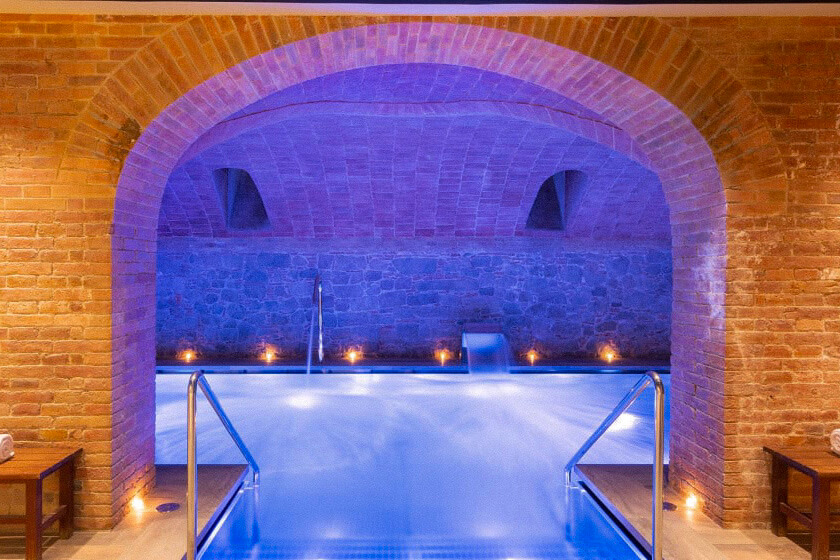
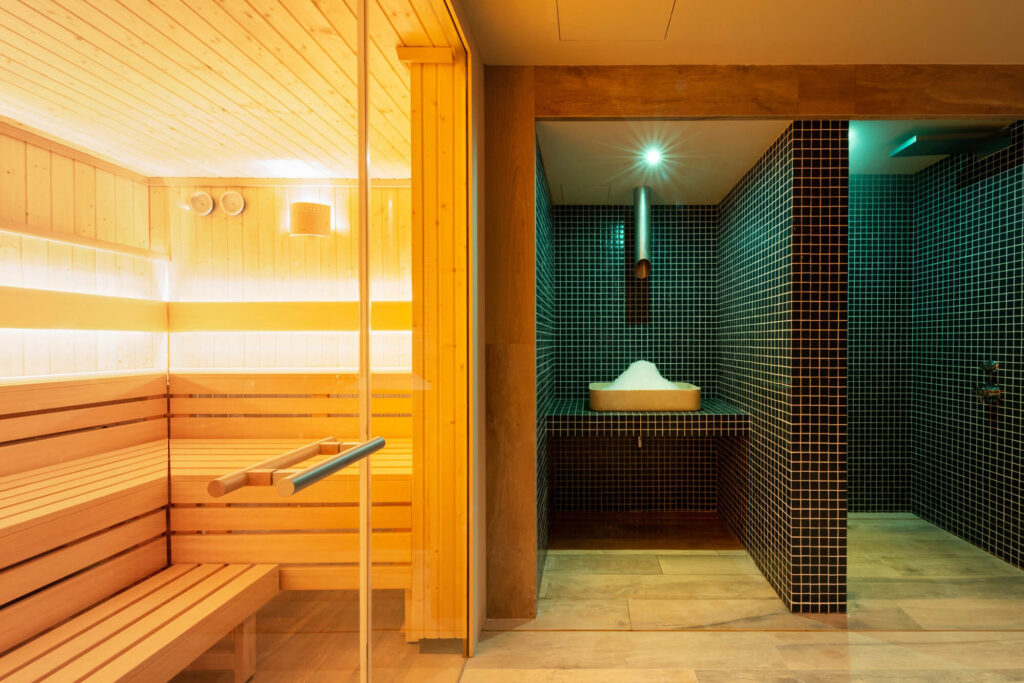
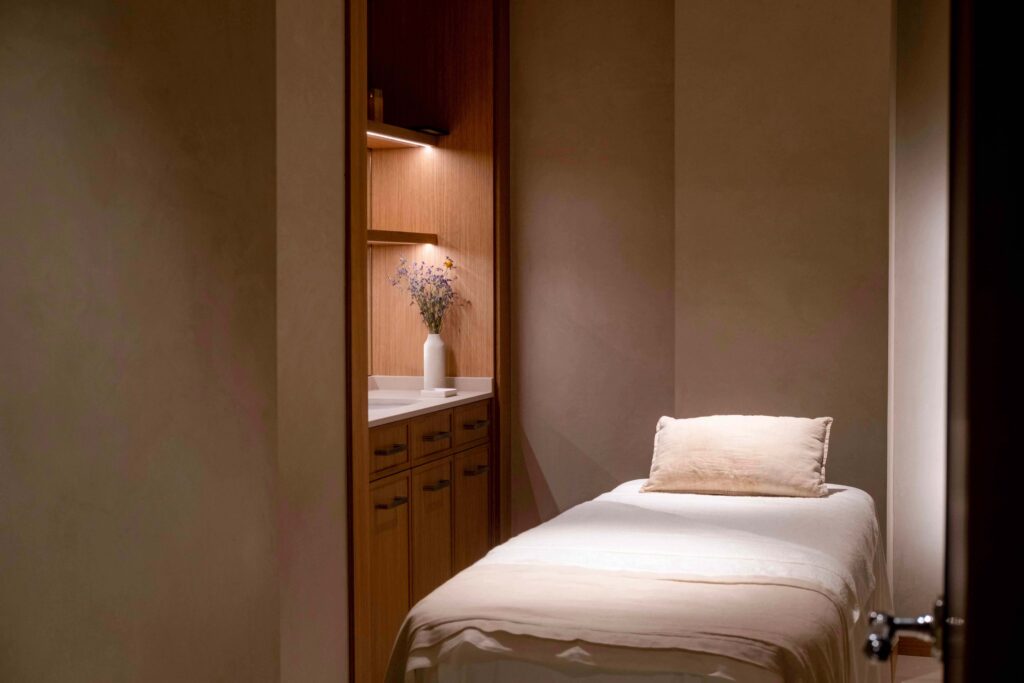
Spa pampering break.
The VAN will be waiting for you at the Parc’s doors, to take you to your next, unexpected stop; the Spa SIARGAO. In this award winning historic spa, you will receive a relaxing massage, with techniques carefully crafted to connect with the body through your senses and, performed with cosmetics 100% natural, organic and, toxic free. Also you’ll enjoy the water circuit; a circuit that combines heat and water, with a dry sauna and steam bath, ending with a relaxing dip in the pool.
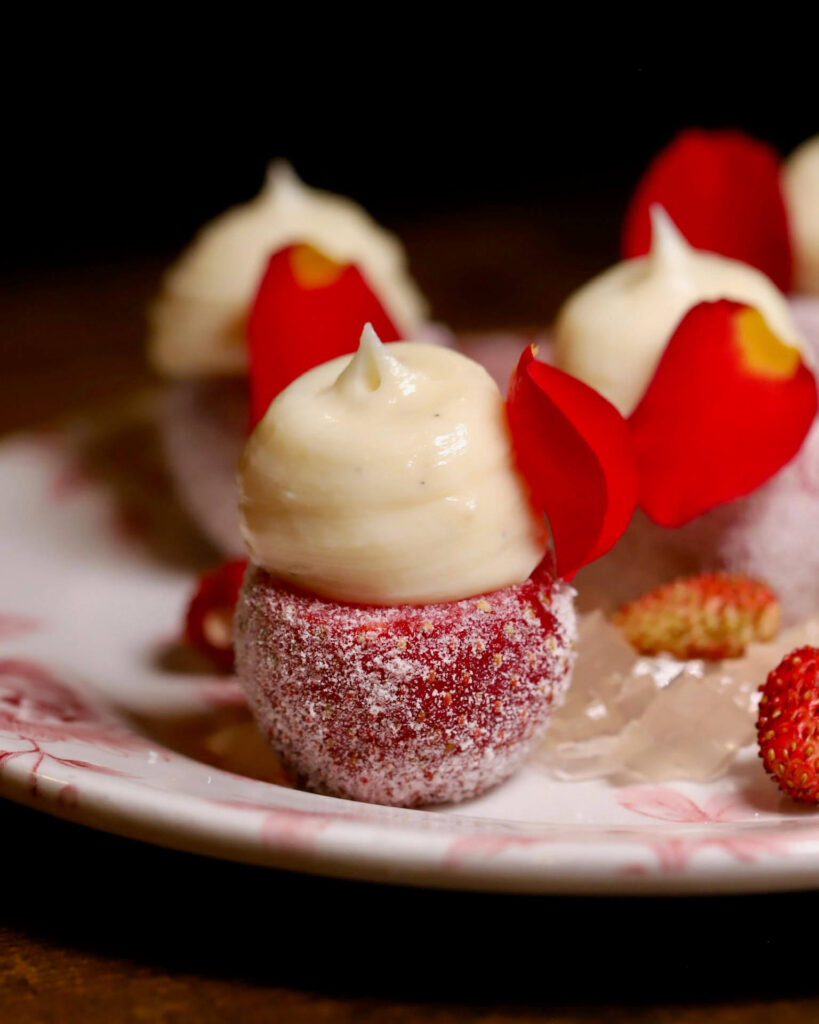
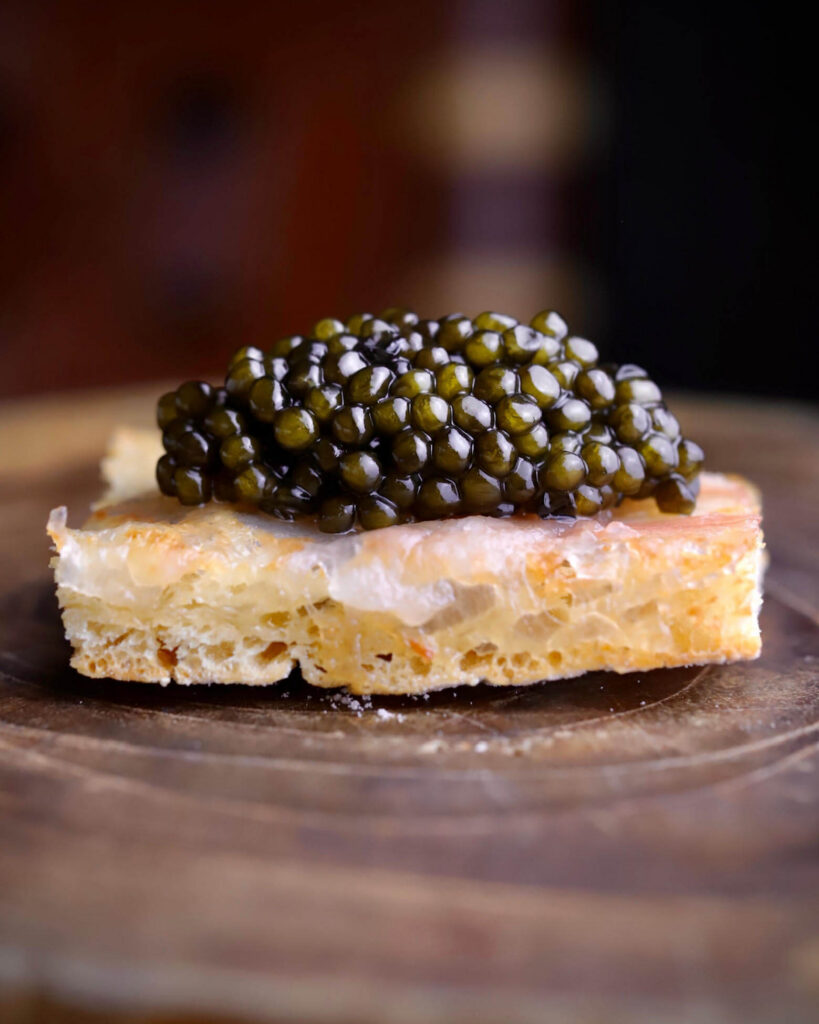
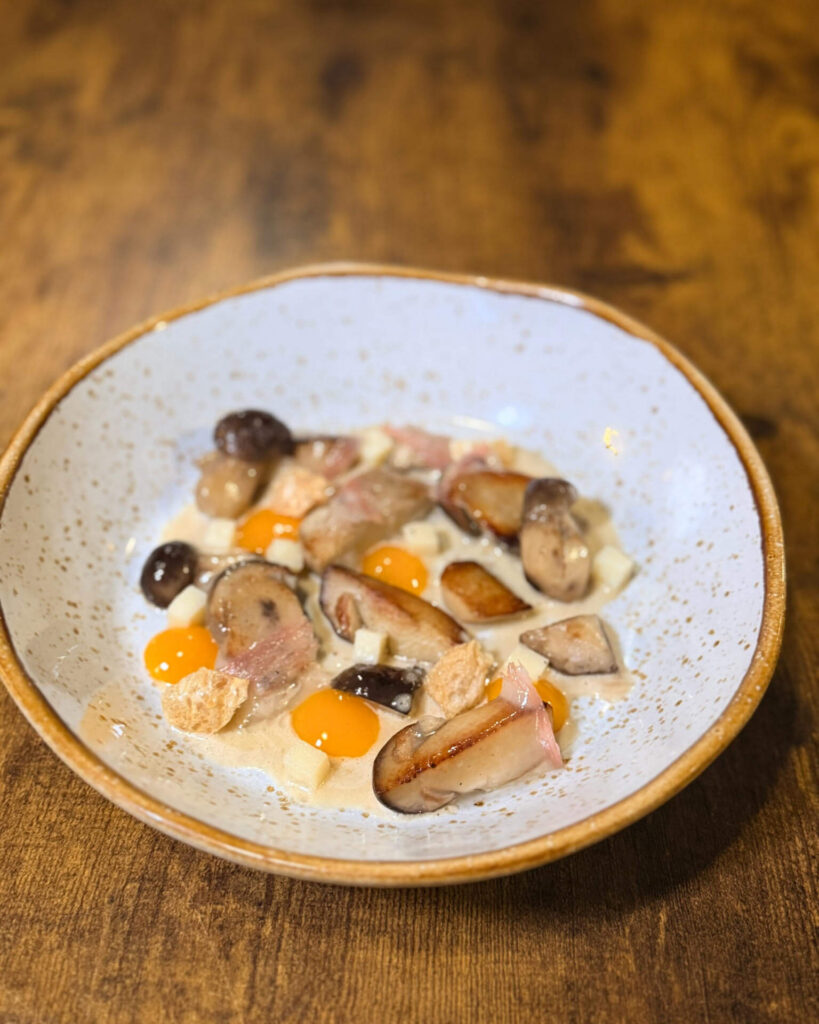
Suculent Restaurant
Now that you feel renewed and fresh after the Spa, we’ll take you to dinner. With a short 7 mins walk with your Guide, you’ll arrive at your Michelin Star Restaurant. End the day in this place run by a Ferran Adriá’s direct disciple the Chef Toni Romer. You’ll be delighted with courses created by his talented mind, redefining traditional Catalan cuisine with modern techniques. Enjoy the elegant modernity of the place, and be surprised, witnessing the kitchen of the restaurant where the magic happens.
Day 2
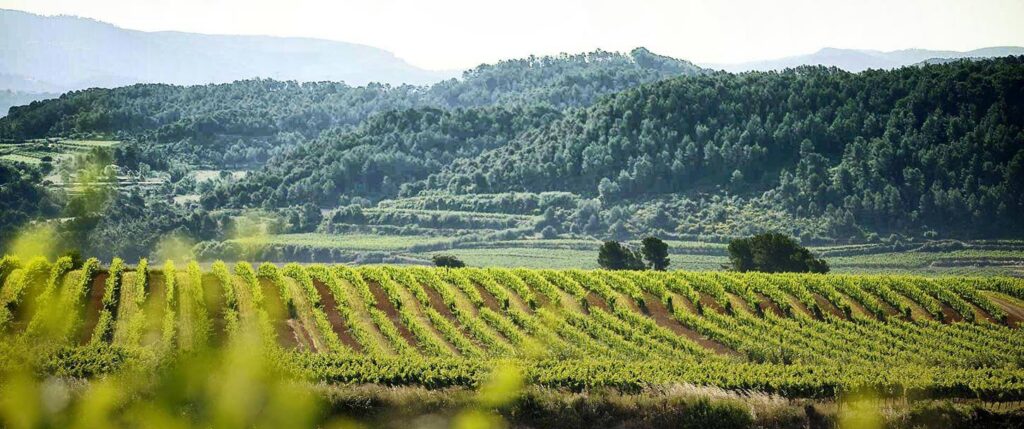
Get in the Van to be transported warm and comfortably to the Penedés Region, the area where vineyards have survived centuries, and the wine plays a part in history for all of the families of the region.
The Penedès Wine Region
The Penedès region, nestled between the Mediterranean Sea and the Montserrat mountains, is the cradle of Catalan viticulture and the birthplace of cava. Its history stretches back to Roman times, when vineyards first took root in its sun-drenched valleys. Over centuries, this landscape of gentle hills and limestone soils has evolved into one of Europe’s most respected wine regions, renowned for its native grape varieties — Macabeo, Xarel·lo, and Parellada — and the meticulous craftsmanship that defines its sparkling wines.
What sets the Penedès apart is its balance of tradition and modernity. Family-run estates coexist with avant-garde wineries designed by leading Catalan architects. Visitors can explore charming medieval villages, cycle through endless vineyards, or enjoy private tastings under century-old olive trees. The region’s soul lies in its authenticity: a perfect harmony between land, light, and the Catalan art of living.
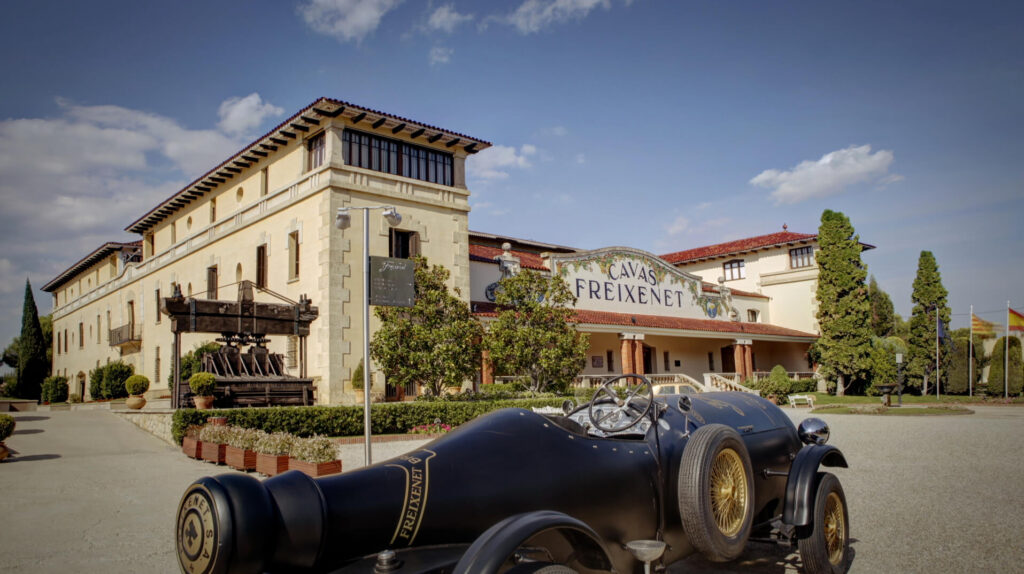
So you will be guided into the very core of one of the most famous and emblematic CAVA’s cellars, Freixenet, and from the inside, you will learn everything about this sparkling wine, while tasting it along with the perfect cheese and cold meats to bring out the most delicious flavors that will awaken all of your senses.
Cavas Freixenet (Sant Sadurní d’Anoia)
Founded in 1914, Freixenet is one of Spain’s most emblematic cava houses, a family-run company that turned the traditional Catalan sparkling wine into an international symbol of celebration. Beneath its modernist façade, Freixenet hides an underground labyrinth of cellars that stretch for kilometers beneath the vineyards of Sant Sadurní d’Anoia — the heart of cava country. These caves, still used today, are a journey into the region’s vinicultural past, where time, temperature, and silence create the refined bubbles that made the house famous.
A visit to Freixenet is more than a tasting; it’s a sensory immersion in the story of Catalan craftsmanship. Guests ride miniature trains through the cool, dimly lit tunnels where millions of bottles rest in riddling racks, before sampling the result in elegant tasting rooms. The experience blends industrial innovation, Art Nouveau aesthetics, and the spirit of Mediterranean celebration — a perfect reflection of Catalonia’s ability to turn tradition into timeless pleasure.
That tour is the beginning of your morning but the end will be even sweeter. The combination is just ideal; in a just 10mins walk away, you’ll be at Simón Coll Chocolate factory, there you’ll indulge yourself all the way, completely surrounded by the aroma of chocolate and tasting all of its delicious different combinations, while of course, also witnessing how it is made.
Simón Coll Chocolate Factory
Since 1840, the Simón Coll Chocolate Factory has been transforming cocoa into art in the small town of Sant Sadurní d’Anoia, long before Spain’s modern gourmet revolution. What began as a local family workshop evolved into one of the country’s most prestigious chocolatiers, marrying centuries-old techniques with cutting-edge innovation. The aroma of roasted cocoa beans fills the air as visitors step into the factory’s immersive experience — a multisensory journey that reveals how raw cacao becomes the delicate bars beloved by generations.
Today, Simón Coll stands as both a tribute to Catalan entrepreneurship and a testament to authenticity. Visitors can watch chocolate being crafted in real time, guided by experts who explain every stage of the process, from bean selection to tempering and molding. The experience is sweetened with tastings of exclusive creations unavailable elsewhere — a perfect pairing of heritage and indulgence that captures the essence of Catalonia’s artisanal spirit.
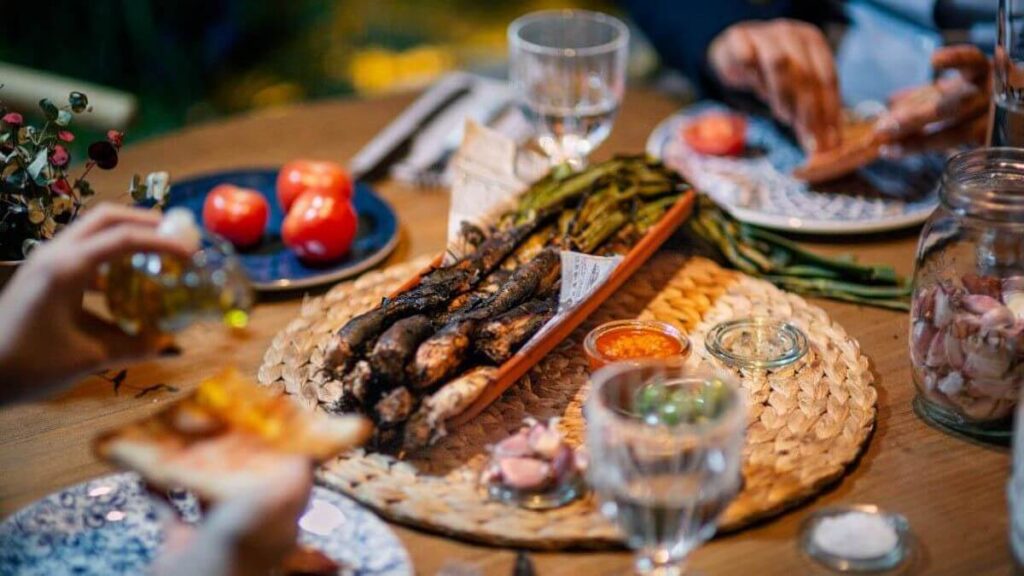
Once you live all of that experience, In 5 min with the VAN, you’ll be having an authentic Catalan rural lunch at a top restaurant of the countryside. Of course being at the countryside you could not miss the richness of the land. You will also take in the flavors of authentic fresh farm products, served to you in the best restaurant of the area, specially selected by us, for you to discover a home made seasonal catalan meal.
Ambrasa Restaurant
This restaurant offers contemporary charcoal-grilled cuisine that pairs perfectly with local wines and cavas. Its matured meats and locally sourced products reflect the essence of the Penedès region.
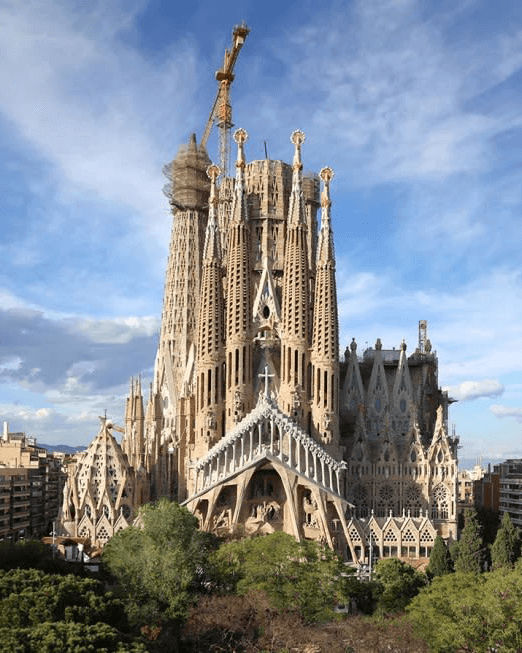
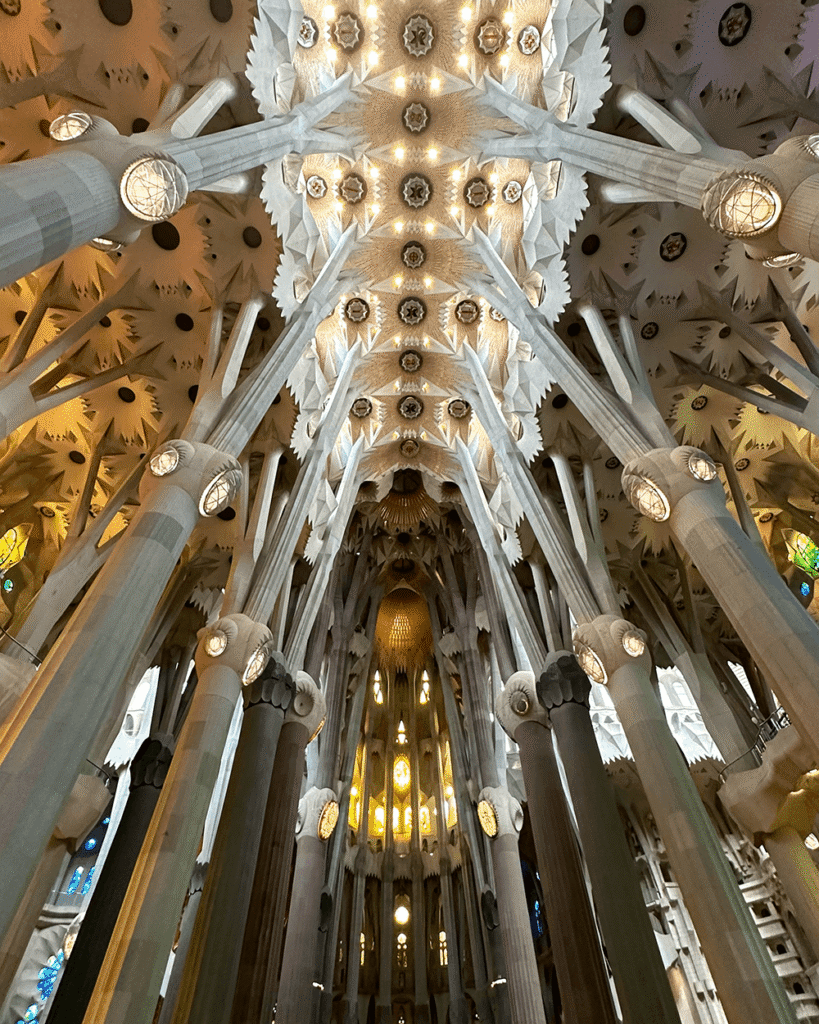
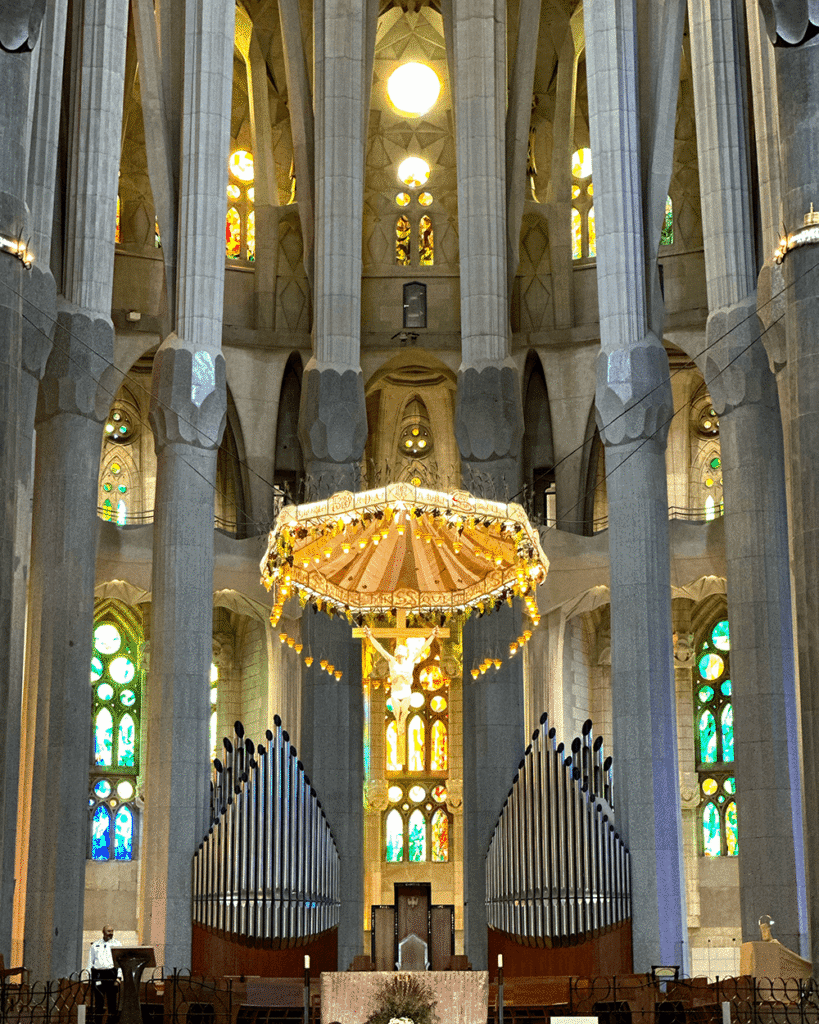
Return satisfied, and chill in the Van. This time it will take you, along with your Guide, to Sagrada Familia Temple to enjoy a Private Tour, and after, as always, you’ll have free time, to soak it up at your own pace. Prepare to be amazed by the genius of Gaudí in the most luminous, joyful, and colorful church in the world. The Temple of The Sagrada Familia is a church you do not expect, like no other you have or will see in the world.
The Temple of the Sagrada Família
Rising like a dreamscape of stone, the Sagrada Família is the unfinished masterpiece of visionary architect Antoni Gaudí, a monument where faith and geometry intertwine. Construction began in 1882, and though still incomplete, it remains one of the most extraordinary architectural endeavors in the modern world. Every façade tells a different chapter of the Christian story — from the joyous Nativity to the dramatic Passion — rendered in sculptural detail that shifts with the light of day.
Inside, towering columns branch like trees, transforming the basilica into a living forest of stone and color. Stained-glass windows bathe the interior in hues that shift with the passing sun, creating an atmosphere both sacred and surreal. More than a building, the Sagrada Família is a spiritual experience — a symphony of art, nature, and devotion that continues to evolve with each generation, symbolizing the enduring creativity of Barcelona itself.
The “Block of Discord” (Manzana de la Discordia, Passeig de Gràcia)
Have a look from the comfort of the VAN of, the most chic and elegant avenue of Barcelona, Paseo de Gracia. Your Guide will explain you about it and, you’ll get off for a close look of “the apple of the discord”, a block where 5 modernist buildings compete to be the most beautiful one.
The Block of Discord: is one of Barcelona’s most striking urban ensembles, a single block on Passeig de Gràcia that became the stage for a creative rivalry among the city’s greatest Modernist architects. Between 1898 and 1912, Gaudí, Domènech i Montaner, and Puig i Cadafalch each transformed neighboring townhouses — Casa Batlló, Casa Lleó Morera, and Casa Amatller — into visionary works of art. The result is a kaleidoscope of color, symbolism, and sculptural fantasy that captures the daring spirit of early-20th-century Barcelona.
Today, this block remains an open-air gallery of Catalan Modernism. Visitors stroll beneath wrought-iron balconies, stained-glass mosaics, and facades shaped like waves and dragons. The “discord” lies not in conflict but in creative diversity — a living dialogue between genius minds who redefined urban beauty. Few streets in the world encapsulate so vividly the imagination and elegance that define Barcelona’s architectural identity.
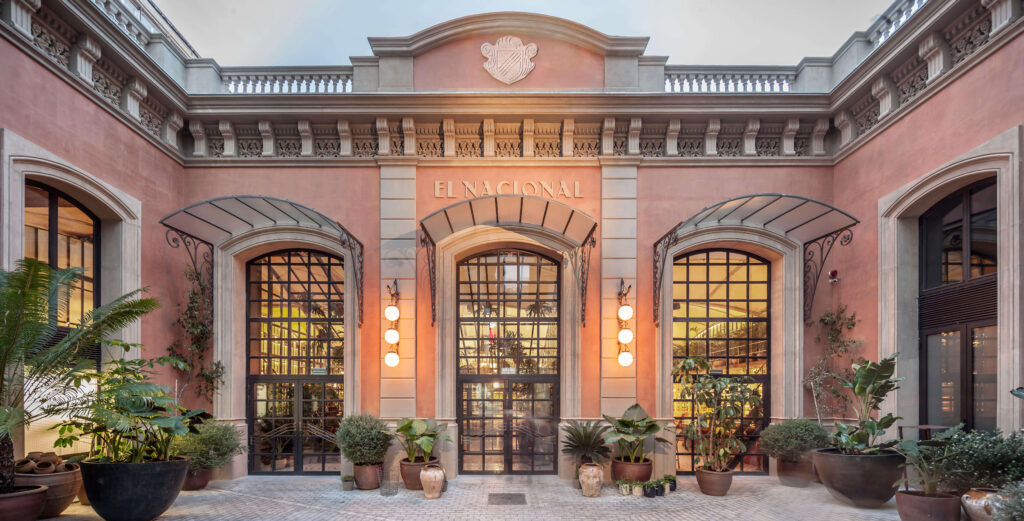
Within a 5mins walk, still in Paseo de Gracia, you’ll arrive at “El Nacional”, a fancy, trendy, cluster of restaurants where you”ll have a tablet waiting for you, to enjoy for dinner, the taste of top selected regional meats.
El Nacional is not just a restauran, it’s a celebration of Iberian culinary culture housed within an early-20th-century industrial space reborn with Art Deco grandeur. Once a car garage, the 2,600-square-meter venue has been transformed into an elegant gastronomic gallery divided into distinct zones: seafood bar, tapas corner, grill, brasserie, and cocktail lounge. El Nacional is where locals and travelers converge under one dazzling roof, with spaces designed to evoke the golden age of Barcelona’s bourgeoisie.
La Brasseria Restaurant, within El Nacional, pays homage to Iberian cuisine featuring meat and grilled dishes. Its art deco décor and cosmopolitan atmosphere make every meal an elegant celebration.
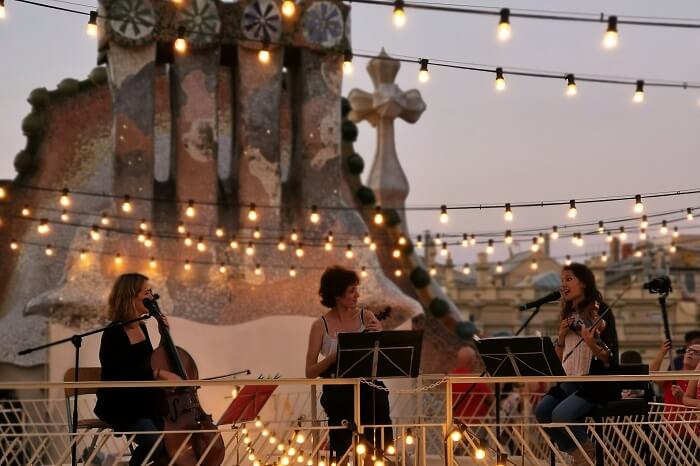
Magical Nights at Casa Batlló
Music at Casa Batlló Rooftop. Truly a unique once in a lifetime experience. You will enjoy a guided tour inside Casa Batlló, one of Gaudí’s most beautiful buildings, to get to the rooftop where you’ll be surprised with a glass of cava and excellent live music.
Casa Batlló, designed by Antoni Gaudí and completed in 1906, is perhaps the most poetic building on Passeig de Gràcia — a fantasy of curves, color, and light that has earned UNESCO World Heritage status. Commissioned by industrialist Josep Batlló, the house transformed an ordinary urban dwelling into an organic sculpture inspired by the sea. The façade shimmers with mosaics of blue and green ceramic tiles, balconies shaped like masks, and a roof that evokes the back of a dragon — a nod to Saint George, Catalonia’s patron saint.
Inside, every line flows like water. Gaudí abolished straight walls, replacing them with undulating forms and ingenious ventilation systems decades ahead of their time. The result is an architectural symphony of nature and imagination — where each window, staircase, and beam of light tells a story. To walk through Casa Batlló is to step into Gaudí’s mind: a place where architecture ceases to be structure and becomes pure emotion.
Day 3
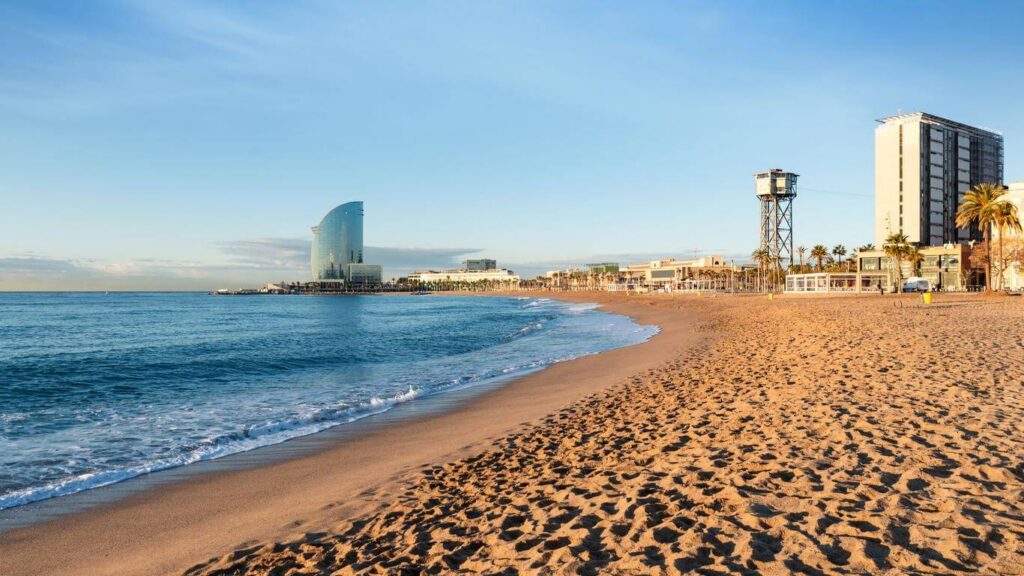
Walking tour in the fishermen’s quarter and Olympic ville
In the morning number 3 you’ll walk with your guide to discover the hidden corners of Barcelona’s seafront: the fishermen’s quarter “La Barceloneta”, with its small squares and its international vibe from so many worldwide people that visits or has moved here, and the Olympic Ville, the modern face of the city that made possible the boulevard by the sea and switched the factories for beaches. These are the neighbourhoods where it feels like it’s always holidays and you could always be free.
La Barceloneta: From Fishermen’s Quarter to Coastal Icon
Once a humble fishermen’s neighborhood built in the mid-18th century, La Barceloneta rose from the sea itself—literally. Created on reclaimed land after the demolition of part of the Ribera district, it became home to sailors, dockworkers, and salt merchants whose lives were shaped by the rhythm of the Mediterranean. Its narrow grid streets, designed by engineer Prósper de Verboom, still whisper stories of maritime Barcelona: families drying fishing nets on balconies, the scent of grilled sardines, and the hum of taverns at dusk. Today, Barceloneta blends nostalgia with modern allure—where old fishermen’s houses stand beside chic seafood restaurants and golden beaches that reflect both the city’s working-class soul and its cosmopolitan evolution.
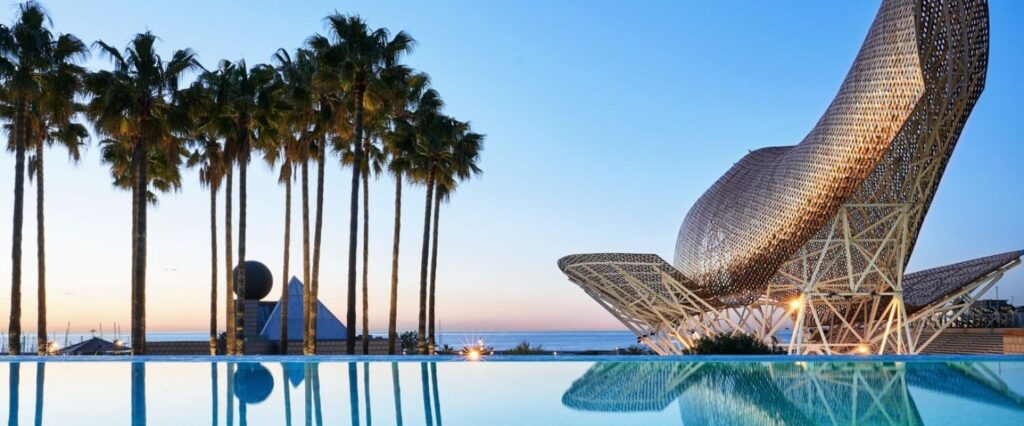
The Olympic Village – A Modern Renaissance by the Sea
Just north of Barceloneta, the Vila Olímpica del Poblenou embodies Barcelona’s dramatic rebirth for the 1992 Olympic Games. What was once a derelict industrial zone became a bold experiment in urban regeneration, transforming smoke-stained factories into avant-garde architecture and open waterfront promenades. The twin towers—the Mapfre Tower and Hotel Arts—rose as symbols of a new international Barcelona, open to the sea and to the world. Today, the Olympic Village remains a seamless fusion of leisure, design, and heritage: a place where locals jog by sculptures by Gehry and Chillida, yachts glide through Port Olímpic, and the city’s Mediterranean future continues to unfold where factories once stood.
Sailing trip, sangria and music.
Sail under the sunlight, during this private trip, you’ll enjoy views of the skyline of Barcelona, the Sagrada Familia or the Agbar Tower in the distance, getting the salty breeze to caress your face. Relax and admire the views, having a glass of sweet sangria, and chill with the sophisticated sound of a spanish guitar, crowning this unforgettable moment.
The Seafront of Barcelona
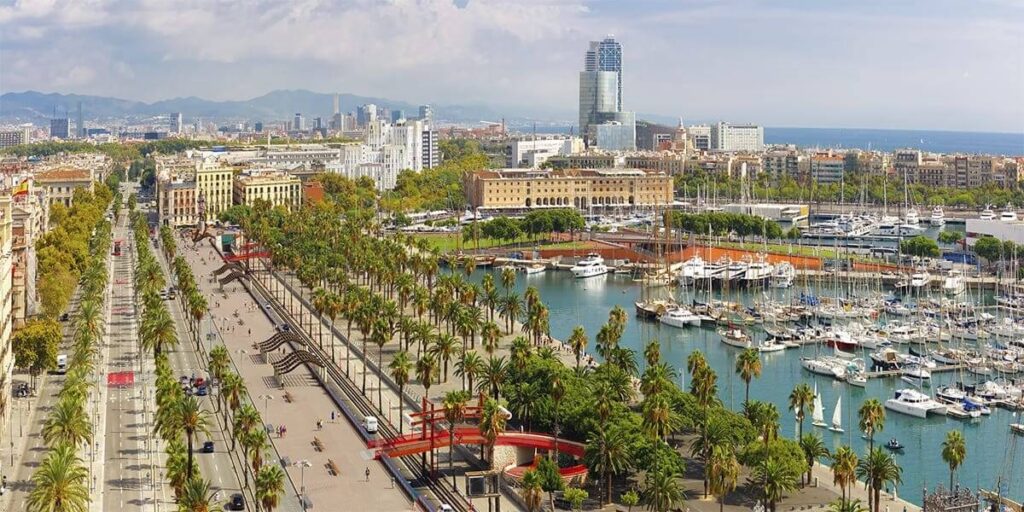
Once a working shoreline of fishermen and shipwrights, Barcelona’s seafront has been transformed into a graceful promenade that embodies the city’s eternal love affair with the sea. From the old port of Port Vell, guarded by the statue of Columbus, to the golden arc of the Barceloneta beaches and the sleek marinas beyond, this is where Barcelona breathes with Mediterranean rhythm. The scent of salt mingles with that of grilled seafood; sailboats glide past modern yachts; and locals and visitors alike stroll beneath palms as the sun sinks into the horizon. The seafront is not just a landscape — it’s a stage where the city’s joie de vivre unfolds daily, a place where time seems to slow down and luxury means simplicity, authenticity, and light.
The modern waterfront was reborn for the 1992 Olympic Games, yet its roots reach deep into centuries of maritime history. Behind every pier and promenade lies the story of a city that looked outward to the world, trading silk and wine for ideas, art, and freedom. Today, the coastline mirrors Barcelona’s spirit — cosmopolitan yet rooted, sophisticated yet spontaneous. Whether experienced from a private yacht, a seaside terrace, or a sunset walk, the maritime front of Barcelona invites travellers not just to observe, but to belong, to breathe in its elegance and to understand why the Mediterranean has always been the city’s muse.
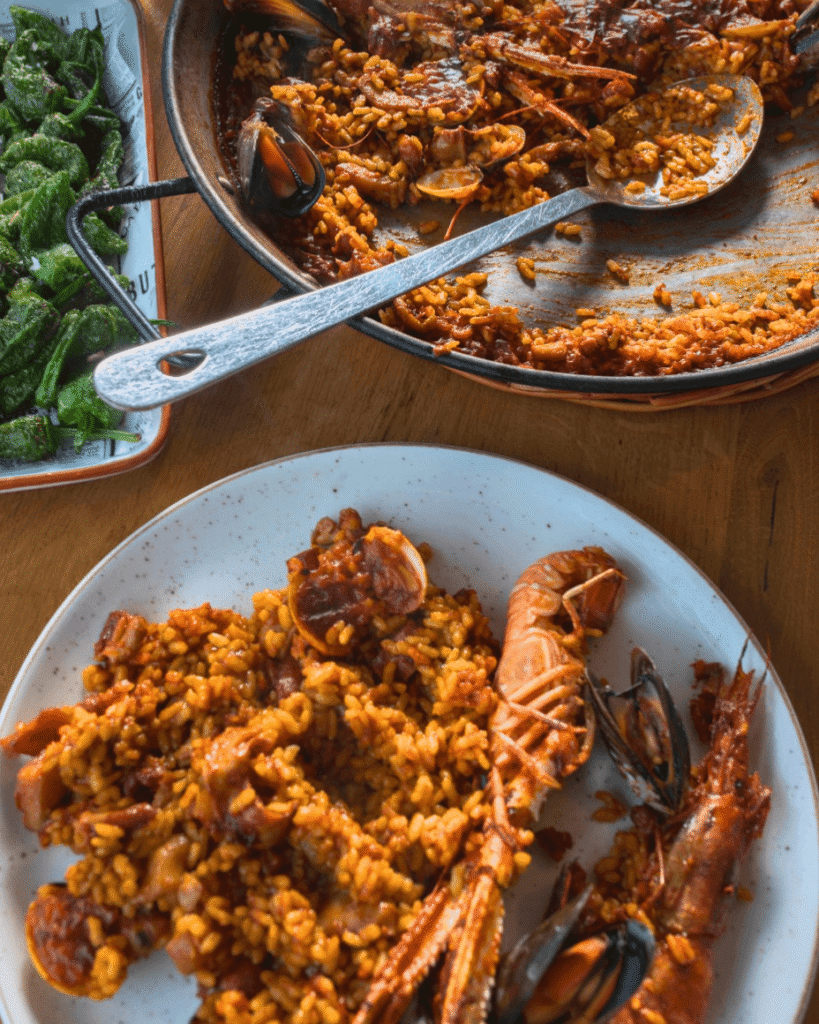
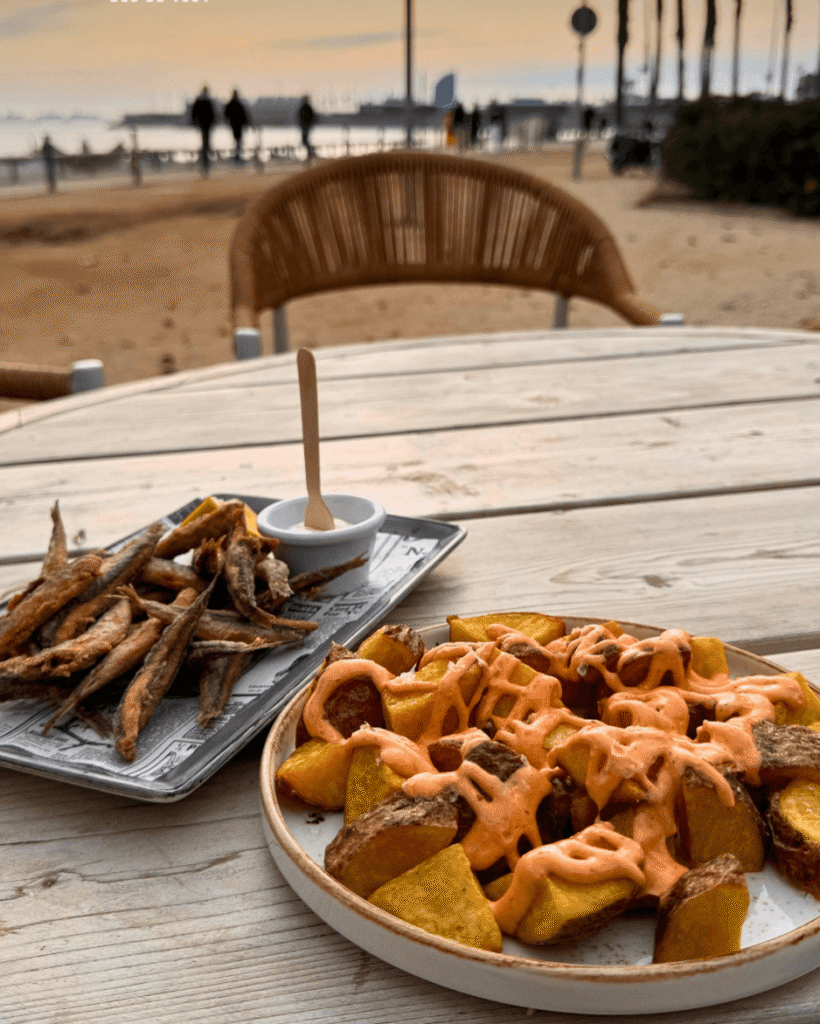
Delicious authentic Spanish Paella.
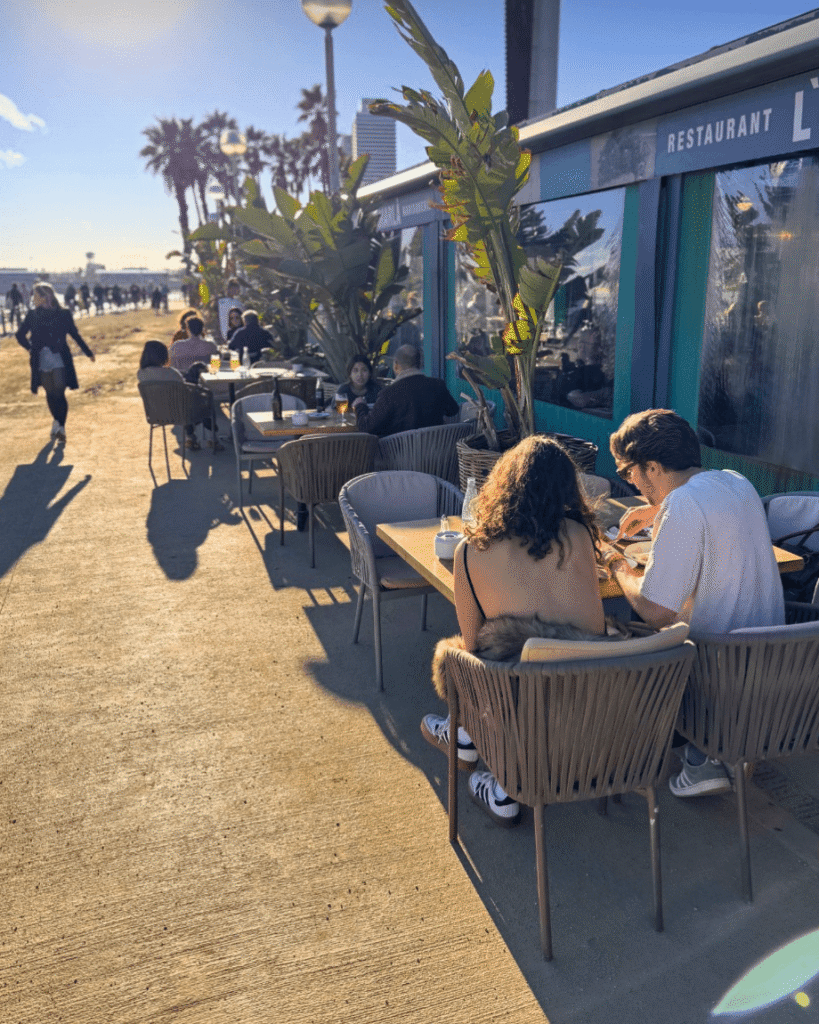
Being so famous, there are many fake Paella restaurants in Barcelona… nothing to be worried about, because that will not happen to you. You will enjoy a delicious authentic paella in a top-notch restaurant reserved only for those who really know how it should be done. Not only will you be secure of having something real but you will flavor all of its taste, in the proper place, right in front of the sea.
L’Escamarlà Restaurant
Located in front of the beach, in the heart of Barceloneta, this restaurant is famous for its fresh seafood and paellas made with rice from the Ebro Delta. Its atmosphere is informal but elegant, with direct sea views and service that balances tradition and sophistication. Perfect for savoring your meal while the Mediterranean stretches out before you.
Montjuich Tour + Cable Car
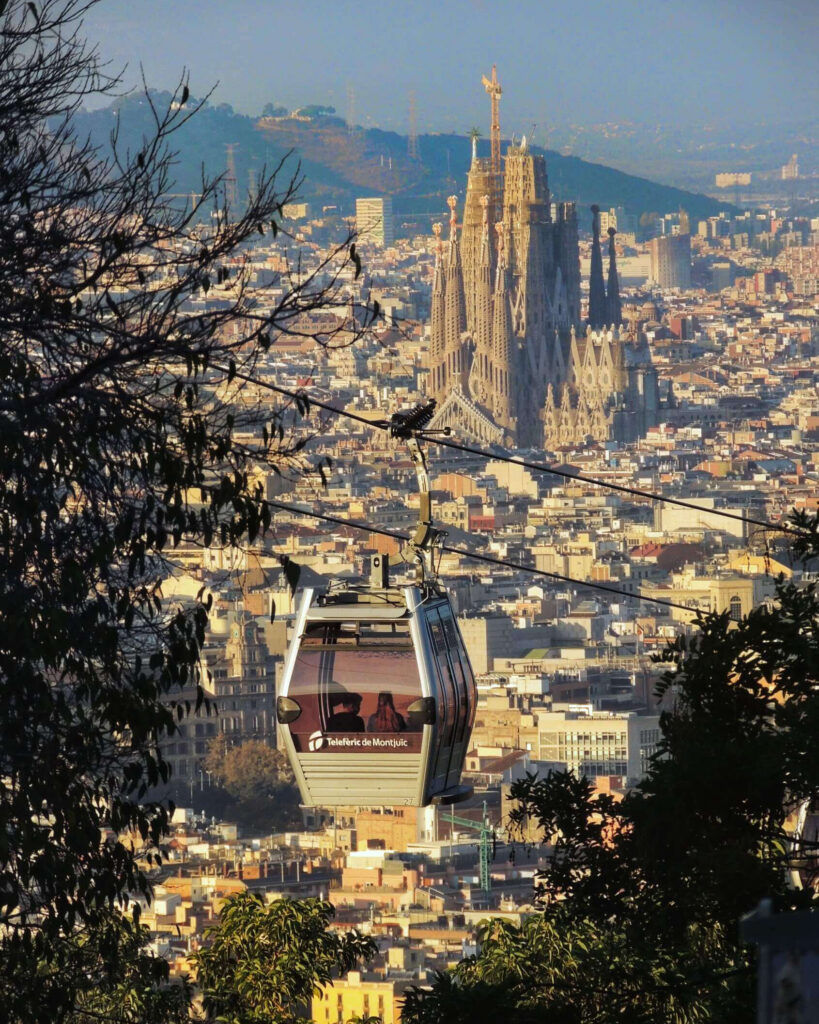
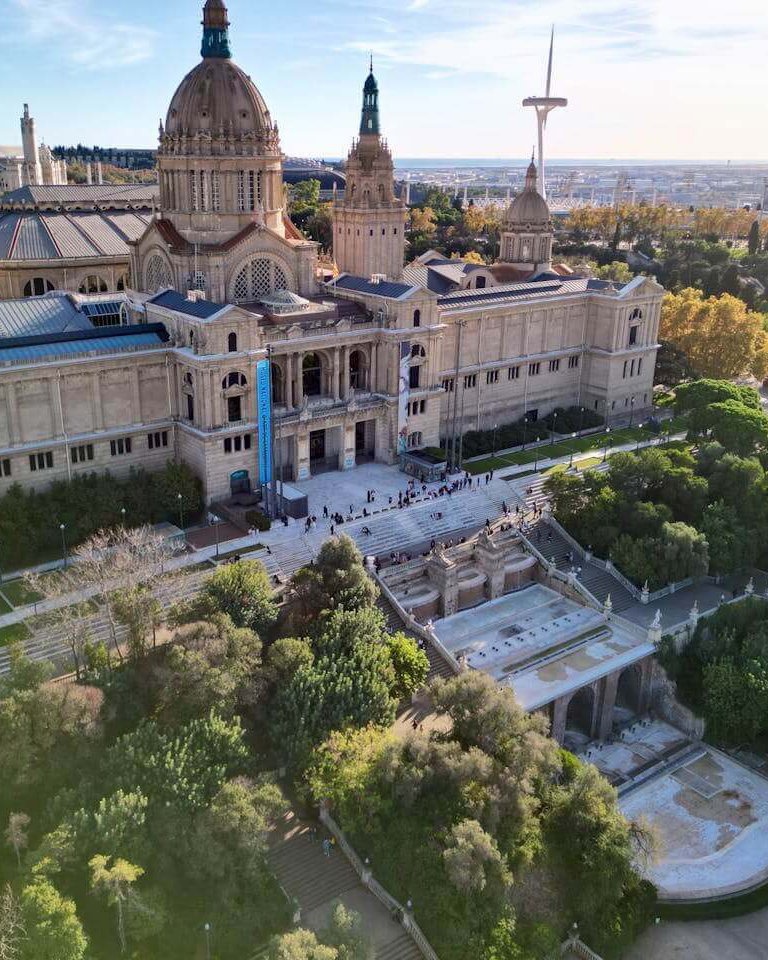
Your private driver will pick you up from the restaurant, and take you in the Van to the city Mountain of Montjuich. This is the mountain where Barcelona locals go to take a break from the concrete and get in touch with nature, and you’ll see it all from the comfortable leather seats of the Van and learn it all from the expertise of your Guide, always there to share the most interesting information. Montjuïc hill is both mountain and memory — a natural watchtower that has witnessed every era of Barcelona’s story. Its name, meaning “Jewish Mountain,” recalls the medieval cemetery once located on its slopes. Through centuries, it evolved from a defensive stronghold to a stage of world fairs and Olympic triumphs. The 1929 International Exposition crowned it with pavilions and gardens, while the 1992 Olympics gave it a new global soul.
Going through Montjuïc today feels like traversing a living museum of art, sport, and nature. Each path unveils a different era — from neoclassical fountains to modern sculptures, from ancient fortresses to panoramic terraces that embrace the sea and the skyline. It is the mountain where Barcelona contemplates itself, proud and eternal.
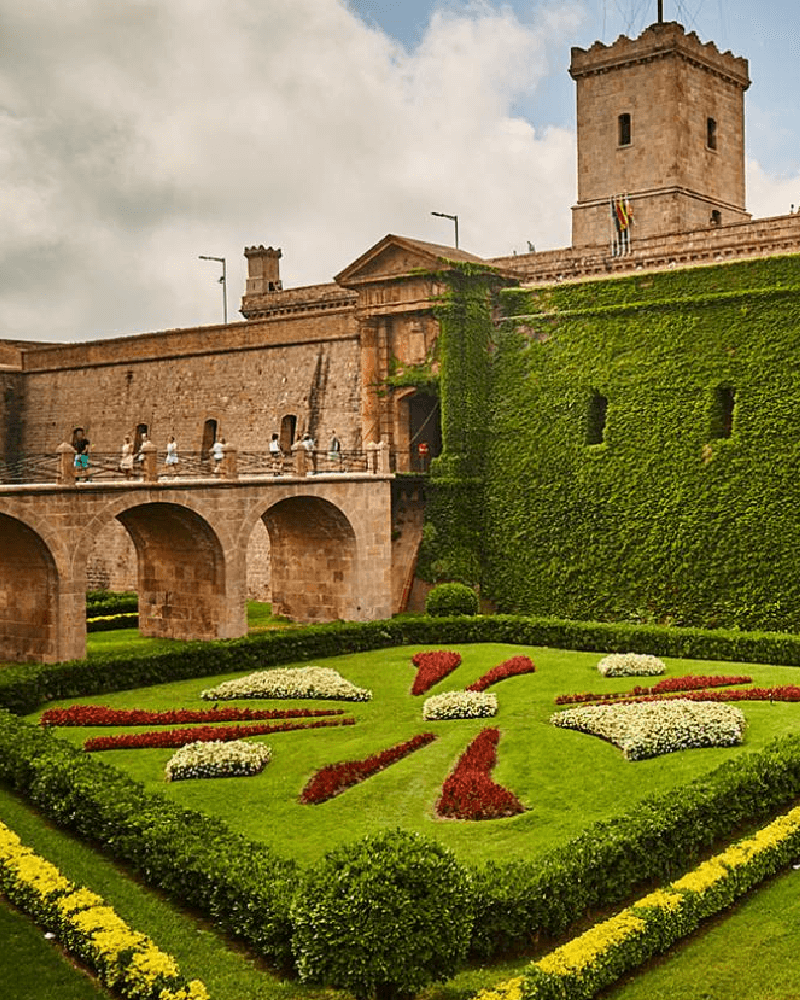
Once the tour in the Van is done, you’ll have a ride in the cable car to the top of the mountain, to complete the tour in the Castle of Montjuich, and then, of course, as it is our promise, you’ll enjoy some free time to take it all in, and take as many pictures as you desire.
Plaça d’Espanya
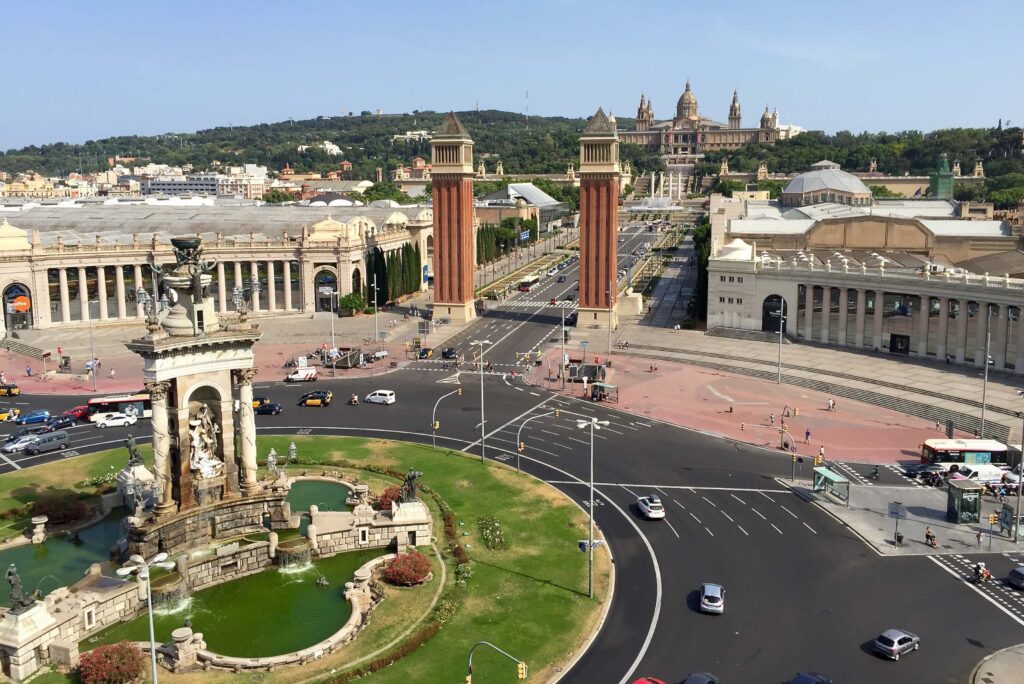
Was designed for the 1929 International Exposition, conceived as a monumental gateway to Montjuïc. Its grand avenues and the Venetian Towers were inspired by St. Mark’s Square in Venice, symbolizing Barcelona’s openness to the world. At its center, the sculptural fountain by Josep Maria Jujol — a close collaborator of Gaudí — celebrates Spain’s rivers and seas through allegory and light.
From the square, majestic stairways and illuminated avenues lead the eye toward the Palau Nacional and Montjuïc’s heights. As night falls, the Magic Fountain bursts into choreography of water, light, and music — an enduring expression of Barcelona’s blend of art, engineering, and poetry.
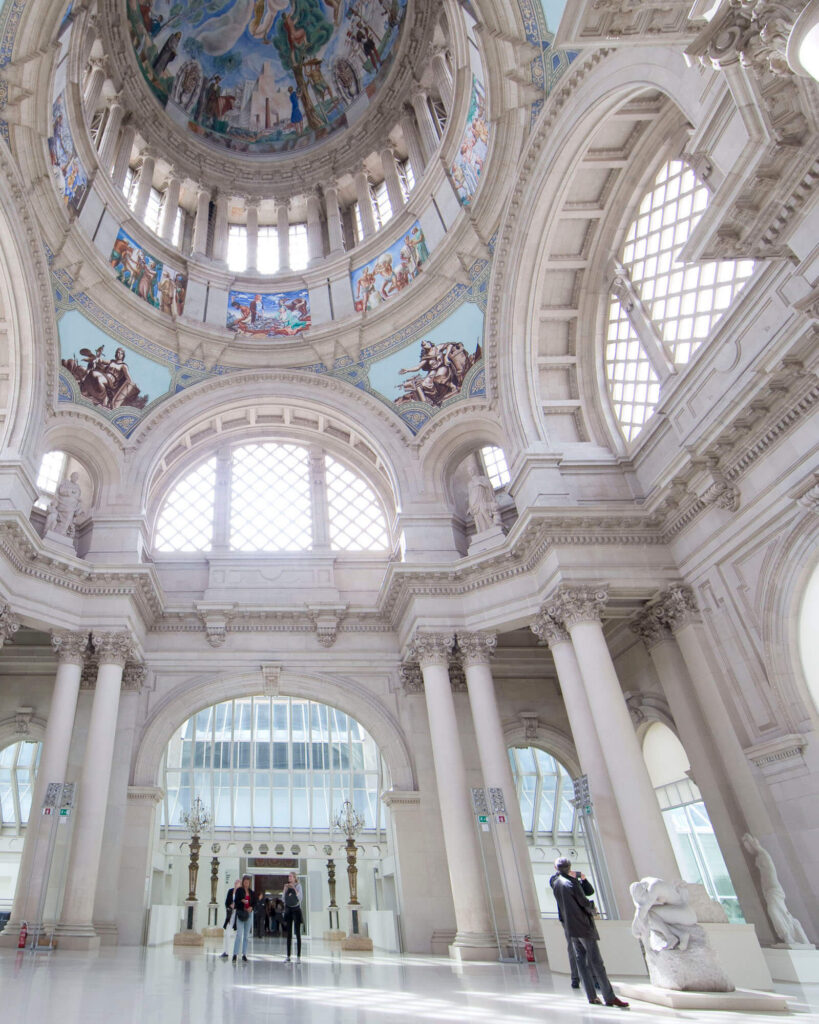
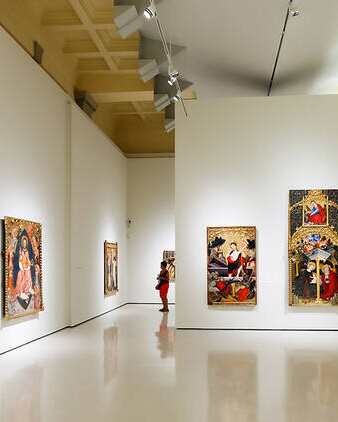
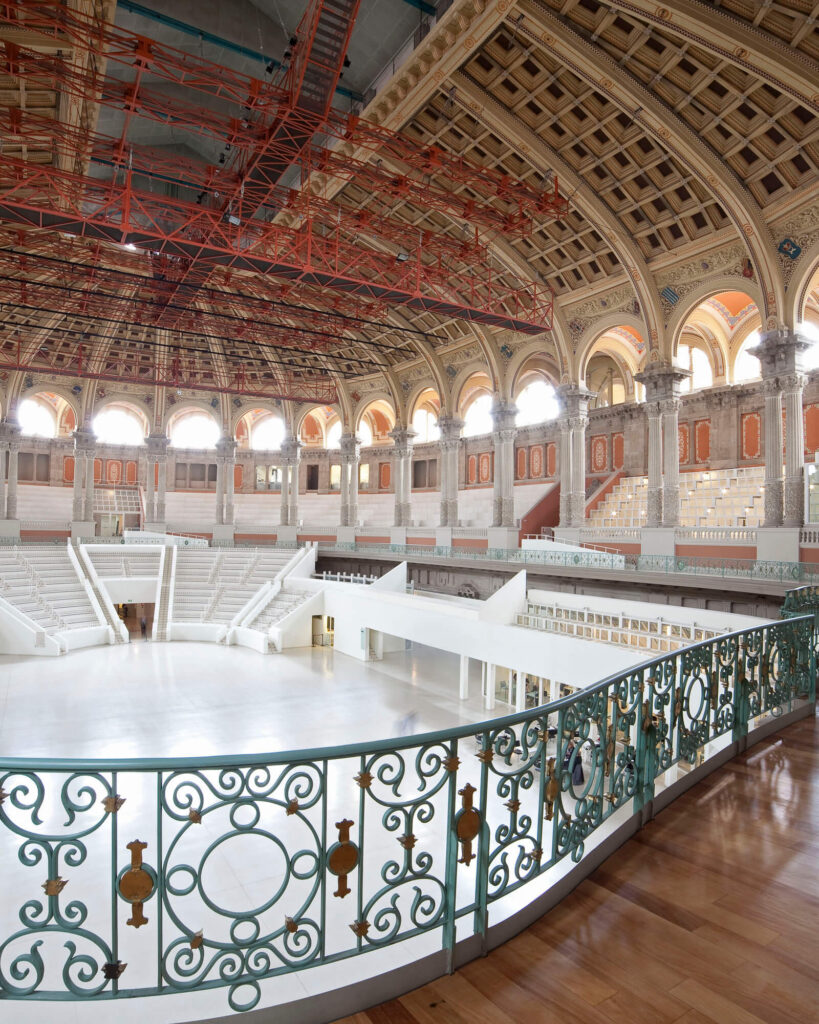
MNAC – National Museum of Art of Catalunya
Housed in the majestic Palau Nacional atop Montjuïc, the MNAC is a temple of Catalan art and identity. Built for the 1929 Exposition, its grand dome and sweeping staircases reflect the ambition of a nation to celebrate its creative spirit. Inside, centuries of art unfold — from Romanesque frescoes rescued from Pyrenean chapels to modern masterpieces.
Beyond its collections, the museum itself is an experience. Terraces overlook the entire city, and at dusk, the Magic Fountain illuminates the night below. The MNAC stands not only as a museum, but as Barcelona’s artistic heart — where history, beauty, and pride converge.
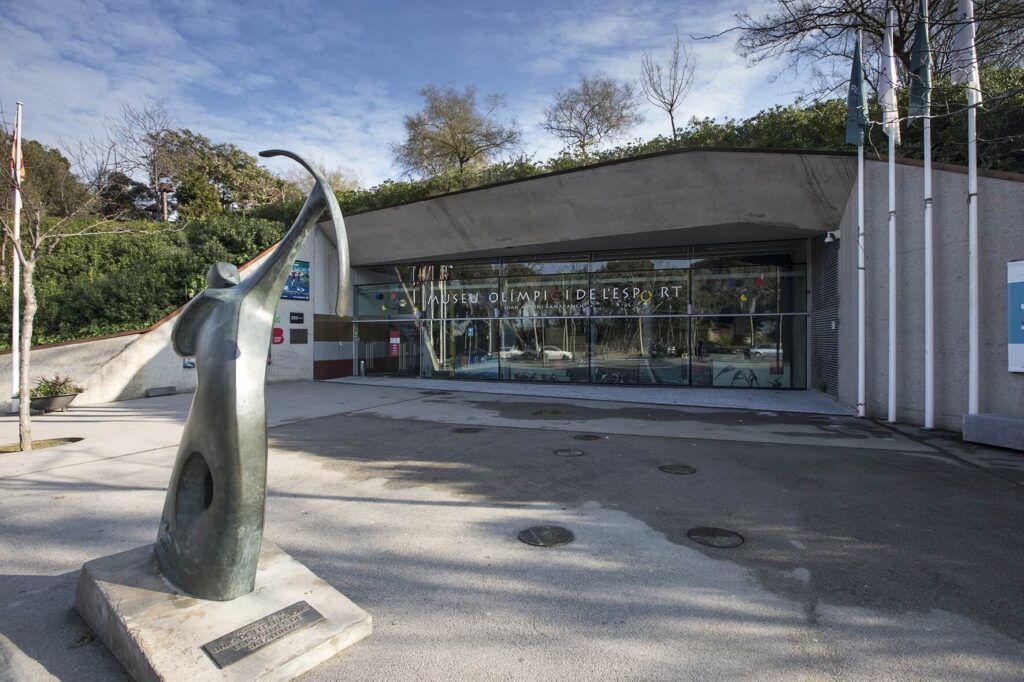
Olympic Museum and Sports Museum (Museu Olímpic i de l’Esport Joan Antoni Samaranch)
Perched on Montjuïc’s hillside, the Olympic Museum tells a story not only of sport but of human resilience. Opened in 2007, it honors the 1992 Barcelona Games that transformed the city and rekindled global fascination with its culture and design. The museum’s architecture mirrors the Olympic ideals — transparency, movement, and light — while its exhibits trace the evolution of athletic history from ancient Greece to the digital era.
Inside, interactive displays immerse visitors in the emotion of competition and the creativity of sporting innovation. Memorabilia from great Olympians stand beside multimedia art celebrating the union of culture and sport. It is more than a museum — it is a tribute to Barcelona’s ability to blend athletic excellence with artistic soul.
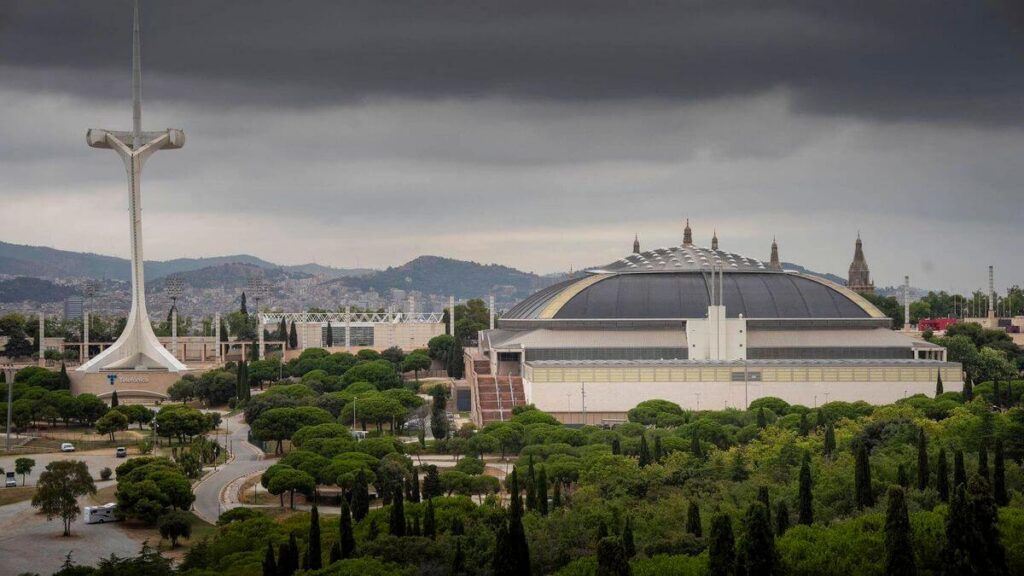
Palau Sant Jordi
Designed by the Japanese architect Arata Isozaki for the 1992 Olympics, Palau Sant Jordi remains one of the most versatile and admired arenas in Europe. Its elegant, domed silhouette rises from Montjuïc as a modern cathedral of sport and music, where engineering meets spirituality. The structure, built to adapt seamlessly to events ranging from gymnastics to concerts, exemplifies Japanese minimalism fused with Catalan precision.
Over three decades, Palau Sant Jordi has hosted world tours, global championships, and cultural milestones. Its acoustics and flexible design create an atmosphere where energy and emotion resonate in perfect harmony — a place where Barcelona’s passion for performance reaches its most powerful expression.
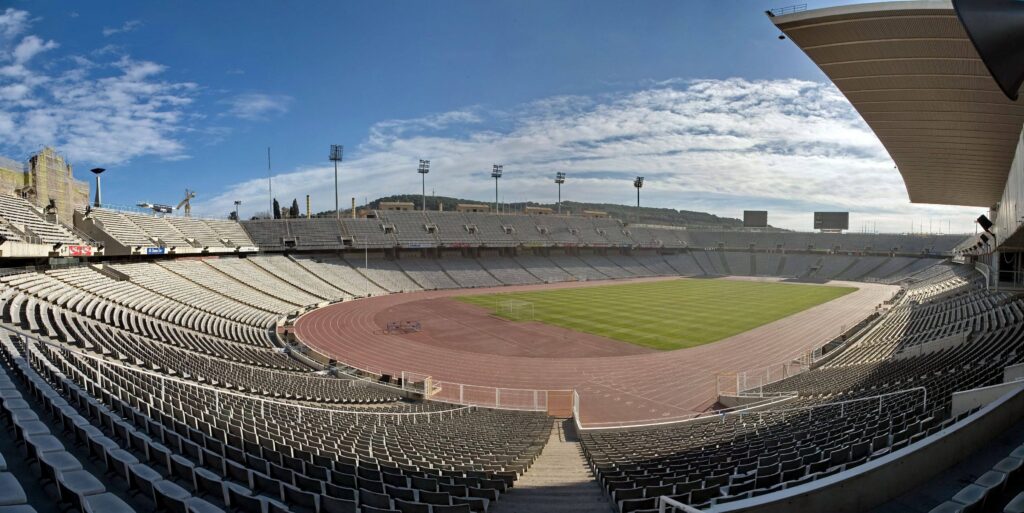
Lluís Companys Olimpic Stadium
Originally built in 1927 for the 1929 International Exposition, the Olympic Stadium embodies Barcelona’s perseverance and ambition. Renovated for the 1992 Games, it became a symbol of rebirth — the stage where the world rediscovered the city’s vitality. Its neoclassical façade conceals a modern heart, where thousands of spectators witnessed moments that defined sports history.
Today, Estadi Olímpic remains an active space for athletics, concerts, and major cultural events. With the Mediterranean breeze sweeping across its terraces, it evokes both the nostalgia of the Olympics and the timeless spirit of collective celebration.
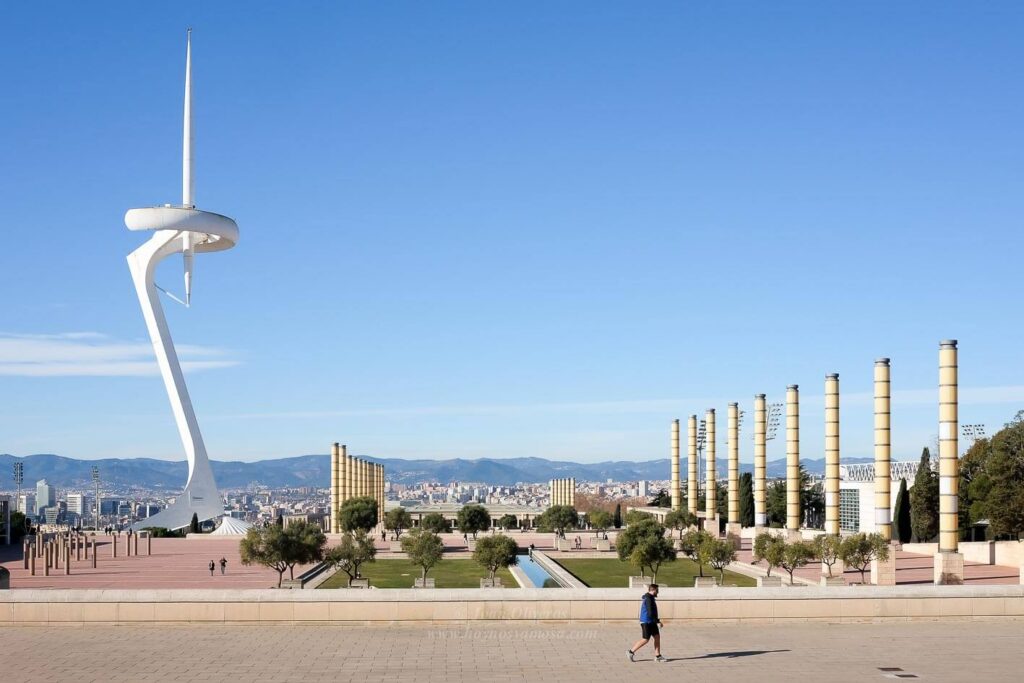
Calatrava Tower (Telecommunications Tower of Montjuïc)
Designed by Santiago Calatrava in 1992, this gleaming white sculpture was created to transmit Olympic broadcasts — yet it transcended its function to become a landmark of modern Barcelona. Its sweeping curves represent an athlete holding the Olympic flame, while its orientation to the sun transforms it into a sundial on Montjuïc’s plaza.
The Calatrava Tower blends art, mathematics, and symbolism. Standing against the Catalan sky, it connects the precision of technology with the grace of motion. As light shifts through the day, its form seems to move — a silent dialogue between structure and soul.
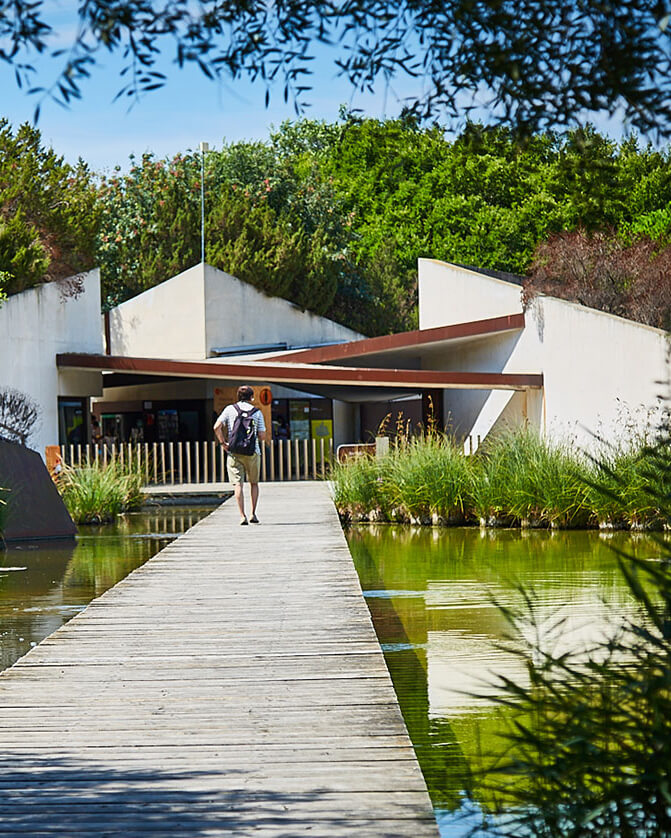
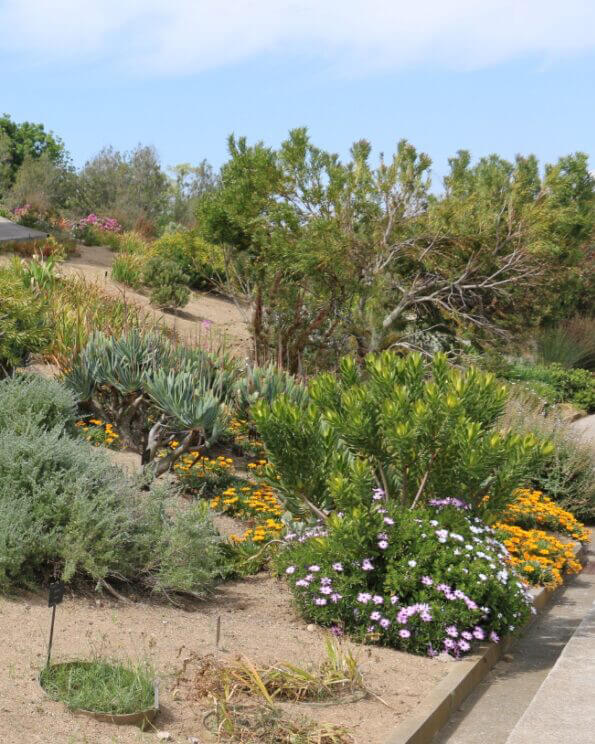
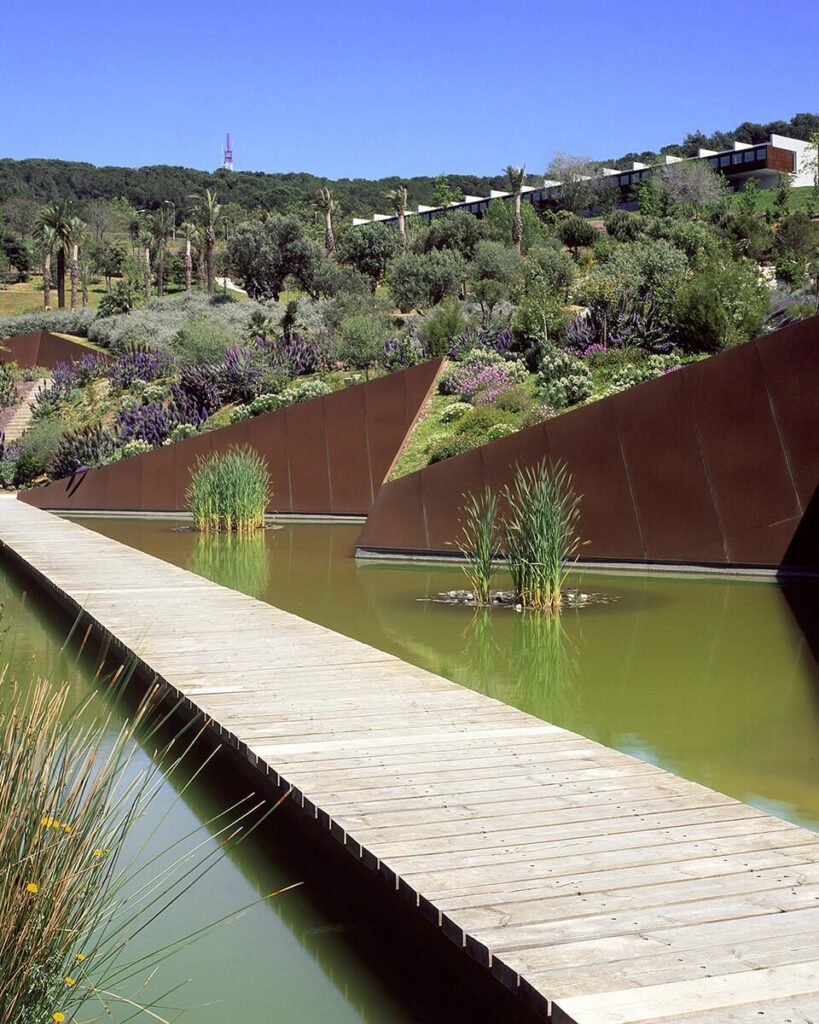
Botanical Garden of Barcelona (Jardí Botànic de Barcelona)
This expansive garden, inaugurated in 1999, spreads across the slopes of Montjuïc as a sanctuary of biodiversity and design. Its terraced paths recreate Mediterranean ecosystems from around the world — from California to Chile, South Africa to Australia — tracing the parallels of climate and life.
For visitors seeking serenity, the garden offers a sensory journey through color, fragrance, and silence. The city fades below as the sea horizon opens before you — an oasis where science, landscape architecture, and poetry coexist in perfect balance.
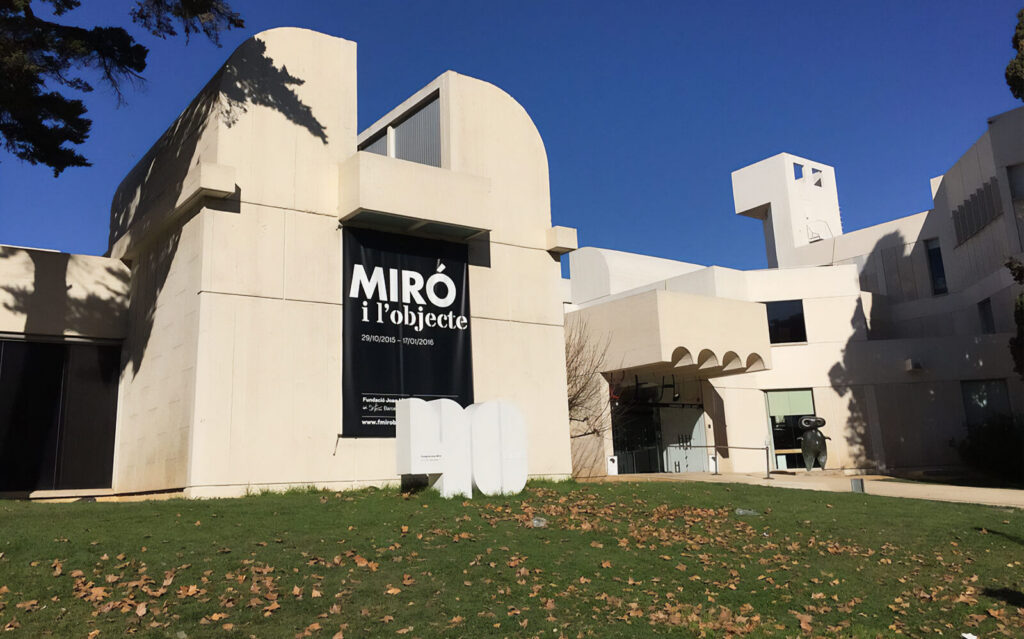
Joan Miró Museum
Founded by the artist himself in 1975, the Miró Foundation stands as one of Barcelona’s great cultural sanctuaries. Its white, sunlit building, designed by Josep Lluís Sert, was conceived as a dialogue between architecture, landscape, and light. The collection offers a vivid journey through Miró’s imagination — from his earliest works to his monumental sculptures that merge art and nature.
Beyond its galleries, the museum terraces open to the Mediterranean sky, framing Barcelona below. It is not merely an art museum; it is an invitation to perceive the world as Miró did — with freedom, humor, and boundless curiosity.
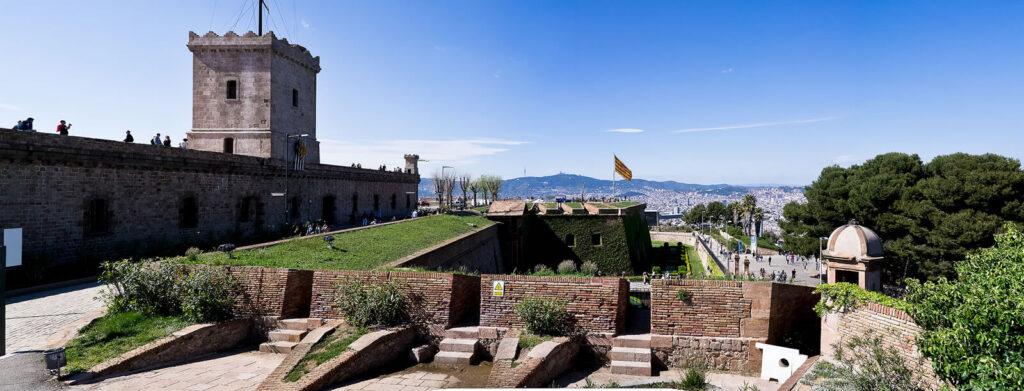
Dominating the harbor from its clifftop perch, Montjuïc Castle has guarded Barcelona for over three centuries. Built in the 17th century and later expanded as a military fortress, it has witnessed sieges, revolts, and the shifting tides of history. Its cannons once defended — and at times oppressed — the city it overlooked.
Today, the fortress has transformed into a space for peace, art, and remembrance. Visitors stroll along its bastions, where the sea and skyline merge. The castle’s thick walls now echo not with battle, but with exhibitions, music, and the wind that carries the voice of centuries.
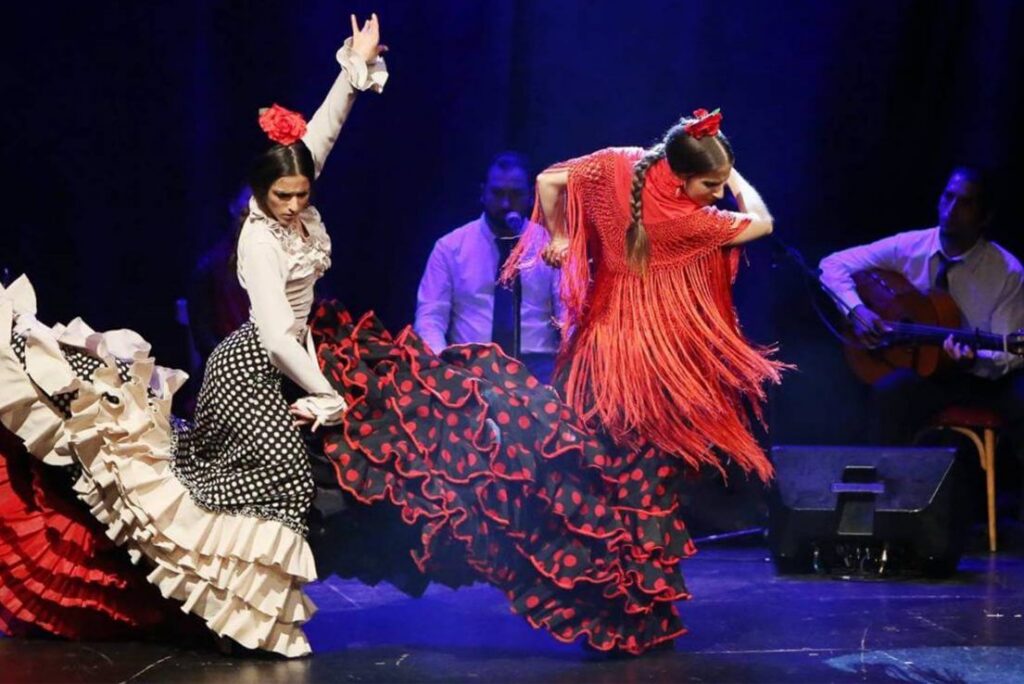
Dinner with Flamenco Show
Last Van transfer of the day, this time for dinner. Dinner will reach another level since it will be served not alone but accompanied by one of the most recognized and awarded Flamenco shows of Barcelona.
“The Tablao Cordobes” is a flamenco classic in Spain. In an intimate setting, the best dancers and guitarists perform a show full of strength and emotion. It is accompanied by a dinner featuring signature Andalusian cuisine. A vibrant and authentically Spanish evening.
Day 4
Montserrat Mountain and sanctuary
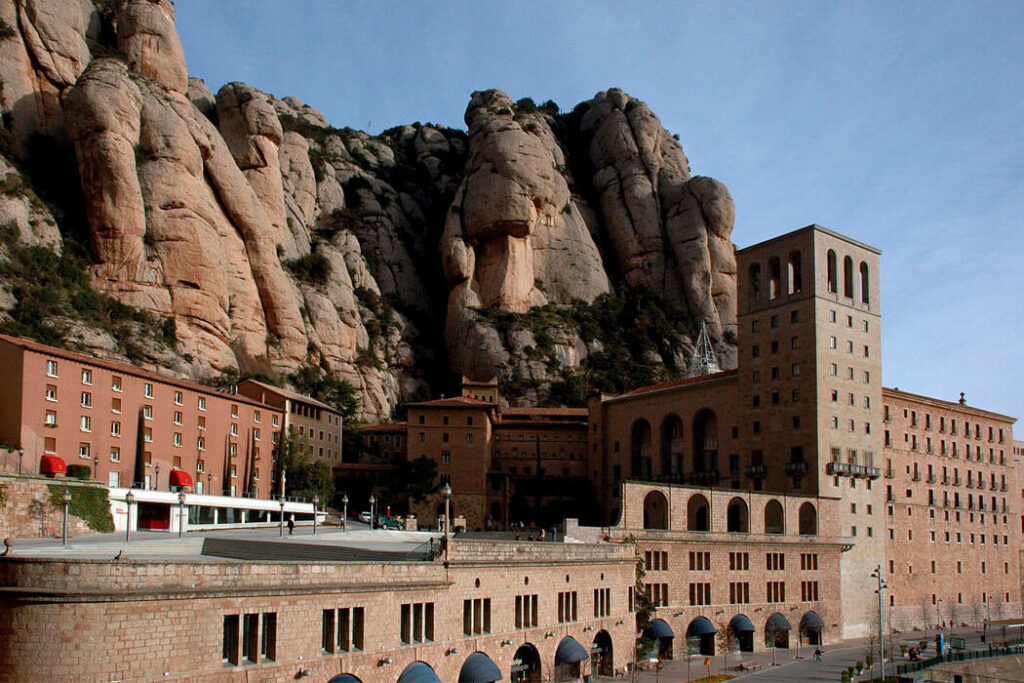
Depart in the Van to the mountain of Montserrat, a truly extraordinary sight. The combination of its unique landscape and the beautiful Benedictine Sanctuary at the top, create a singular mountain setting you will remember forever. You will go up to the sanctuary by rail rack train, delighting with the stunning views. Once up in the top of the mountain, you’ll do a tour, to learn about the Madonna of Montserrat, patron saint of Catalunya, about the history of the sanctuary, and also, you’ll have a sweet break, with the tasting of Coca (typical Catalan sweet bread) and Aromas (a local liquor made with 12 herbs from that same land).
Montserrat Mountain
Rising dramatically from the Catalan plains, the jagged peaks of Montserrat have been a symbol of spirituality and resilience for over a thousand years. The mountain’s name—meaning “serrated”—perfectly describes its extraordinary geology, sculpted by time into surreal, cathedral-like formations that seem to touch the sky. Since medieval times, pilgrims have climbed its trails seeking peace and divine connection, while artists, poets, and philosophers have drawn inspiration from its otherworldly beauty.
Today, Montserrat remains one of Catalonia’s most sacred and awe-inspiring landmarks. Visitors come not only for its breathtaking views but also to feel the quiet mysticism that pervades the landscape—a harmony between nature, faith, and history that continues to define the Catalan spirit.
Sanctuary and Basilica of Montserrat
Montserrat Sanctuary (Santa Maria de Montserrat Abbey)
Nestled high on the mountain’s slopes, the Benedictine Monastery of Montserrat has stood since the 11th century as a sanctuary of faith, art, and music. Within its ancient walls lies the revered Black Madonna—La Moreneta—a wooden statue that has drawn pilgrims for centuries and remains one of Catalonia’s most cherished symbols. The abbey is also home to one of the oldest boys’ choirs in Europe, L’Escolania de Montserrat, whose angelic voices echo daily through the basilica.
The Sanctuary is more than a religious site—it is a cultural cornerstone, combining medieval architecture with Renaissance and modernist elements, and offering visitors an unforgettable encounter with Catalonia’s soul, suspended between mountain and sky.
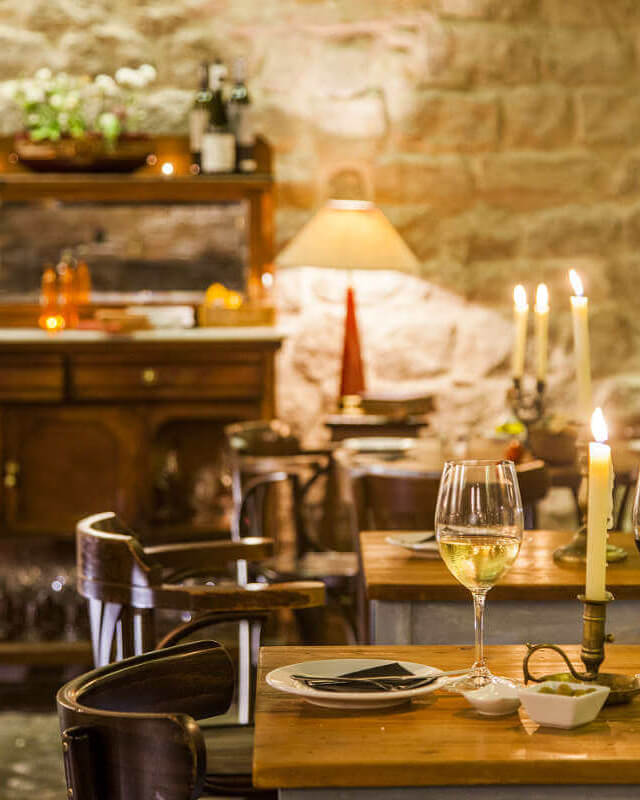
El Bastaix Restaurant
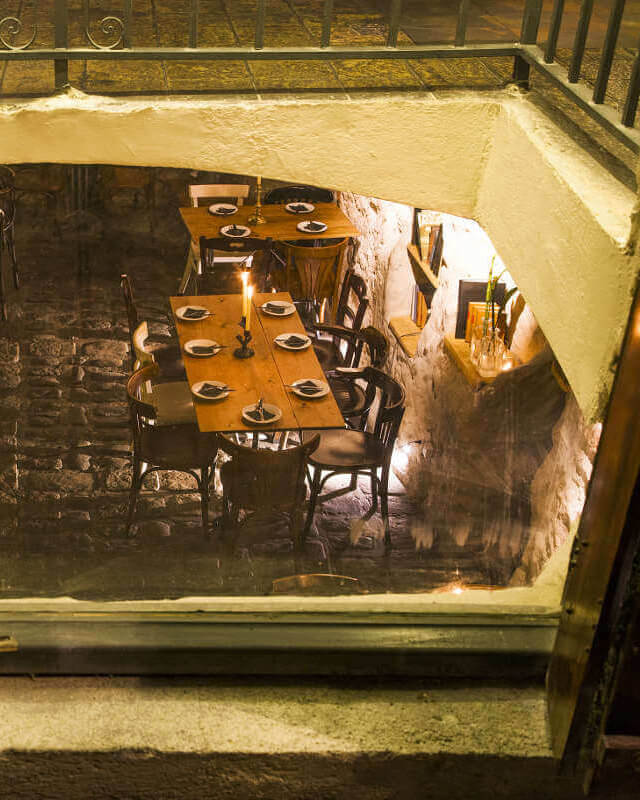
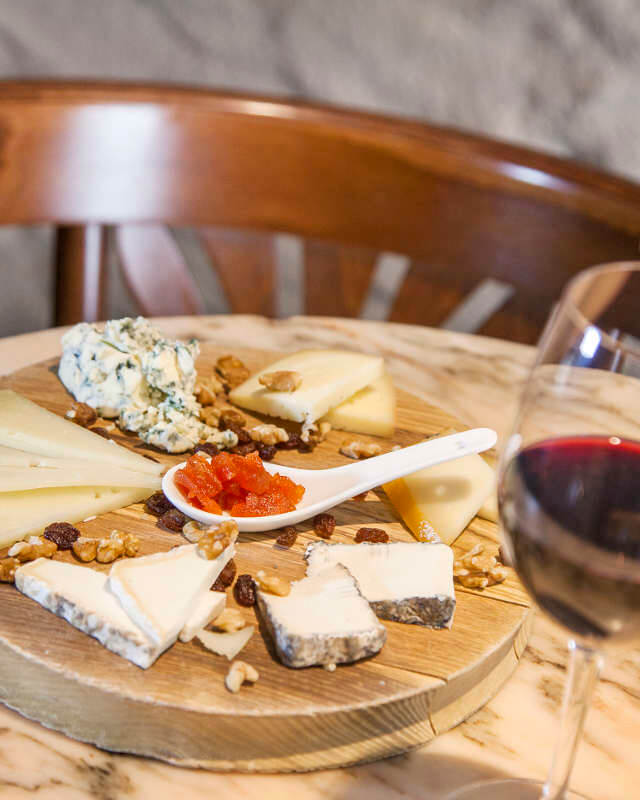
Your Van will be waiting right in the Sanctuary to take you back to Barcelona for lunch. This time you’ll have lunch next to Santa Maria del Mar Church, in a demanded exclusive restaurant where Tapas evolve to give you a new experience of Spain. Located in El Born, this restaurant combines the charm of the old town with contemporary Catalan cuisine. It is known for its local wine list, gourmet tapas, and cozy atmosphere. Perfect for savoring Barcelona at a leisurely pace.
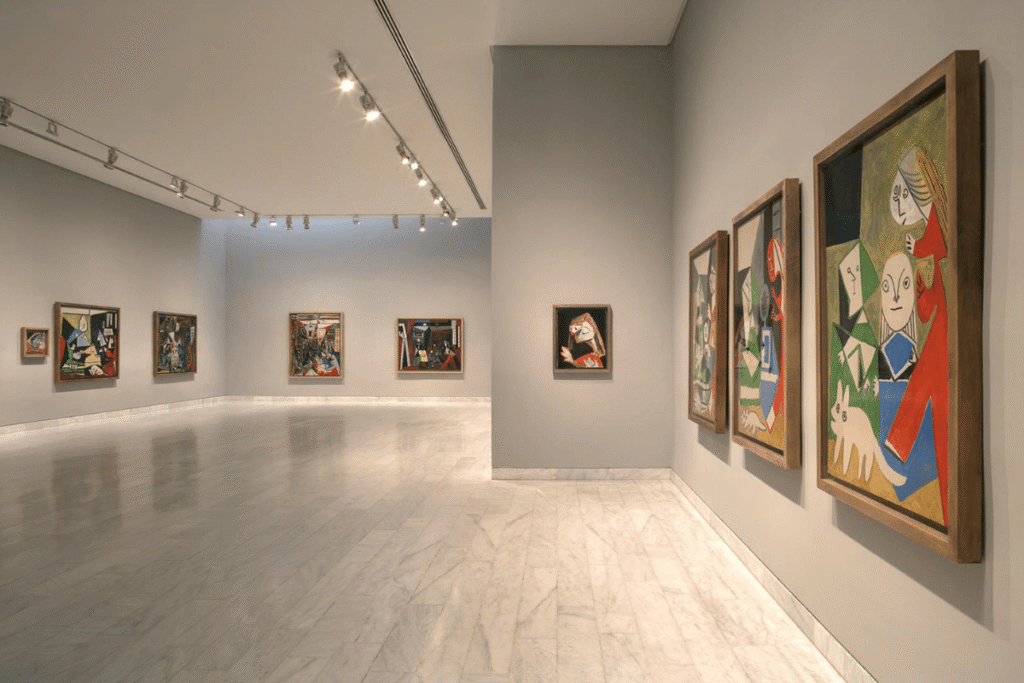
Picasso Museum
Walking from the restaurant, you’ll get to Picasso’s Museum. This is a “must” stop when coming to Barcelona, the museum of one of the greatest painters in history, Pablo Picasso. Witness the learning process in his painting and be amazed on how Picasso’s art evolved from the most classic practices to Cubism. With the audioguide you’ll be able to understand much more about Picasso’s art while strolling through the Museum at your own pace.
Located in the heart of Barcelona’s El Born district, the Picasso Museum is housed in a series of elegant Gothic palaces that whisper stories from the city’s medieval past. It holds one of the world’s most extensive collections of Pablo Picasso’s early works—over 4,000 pieces that trace the artist’s formative years in Barcelona, where his genius first ignited.
Walking through its galleries is like witnessing the evolution of modern art itself: from the youthful sketches and Blue Period masterpieces to personal portraits that reveal Picasso’s deep bond with the city. The museum is both an artistic pilgrimage and a love letter to Barcelona—the place where the world’s most famous modern painter learned to see differently.
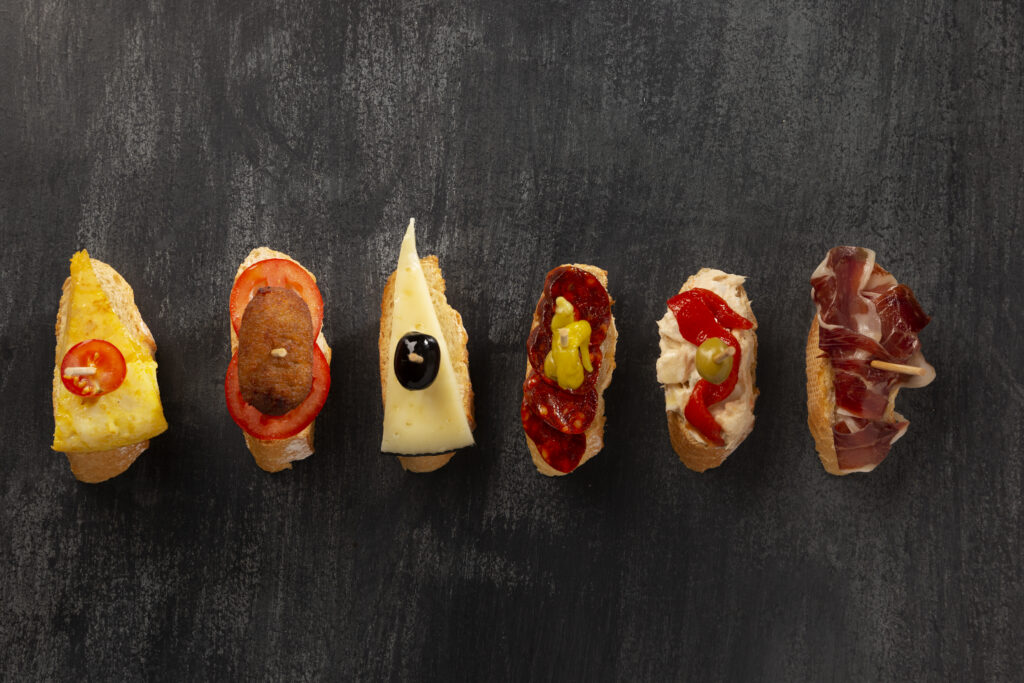
Tapas and wine Walking tour
After the museum you’ll have the funnest tour of all, one for learning, drinking and eating, all together. In this tour you will have the city’s most iconic and prized tapas, in small, family-run restaurants, many of which have been passed down through three generations. These establishments are the heart of Catalan gastronomy, preserving traditional recipes and offering truly authentic flavors. At the same time, strolling through the most historic streets of the Gothic Quarter, bar by bar, restaurant by restaurant, with the food, you’ll be also tasting different local drinks from wine, to Cava, to Vermout.
Travel slow, eat local, and connect deeply.
We are also please to let you know that, by enjoying this tour you will also be supporting a sustainable catalan touristic industry, because we guarantee:
✔ Fresh, locally sourced ingredients from Catalan farmers and markets.
✔ Small, independent restaurants with authentic homemade dishes.
✔ Eco-friendly and responsible tourism, respecting local culture and traditions.
For this experience we partner with Eli & Libor founders of Barcelona Born & Bred — a small, independent company offering authentic food tours in Barcelona, focused on slow tourism, responsible travel, and Catalan culinary heritage.They believe food tells the story of a place — and they bring you this tour to tell Barcelona’s story, one bite at a time.
Day 5
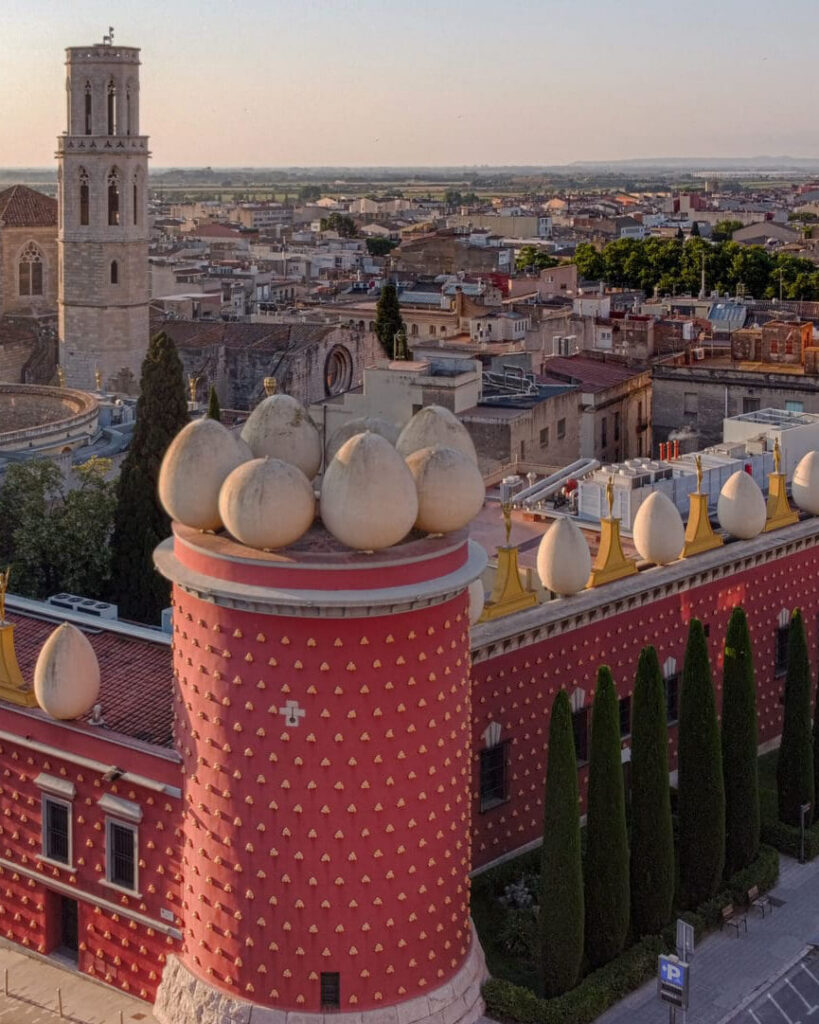
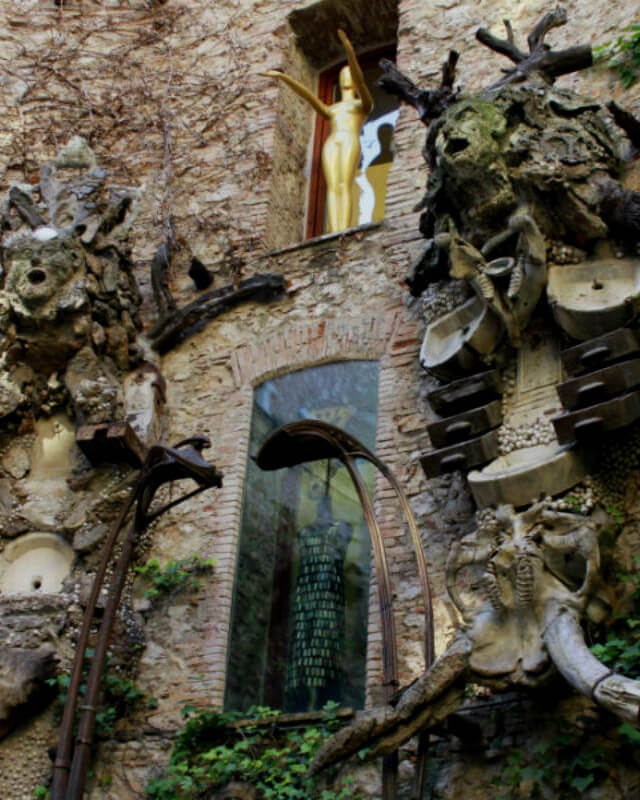
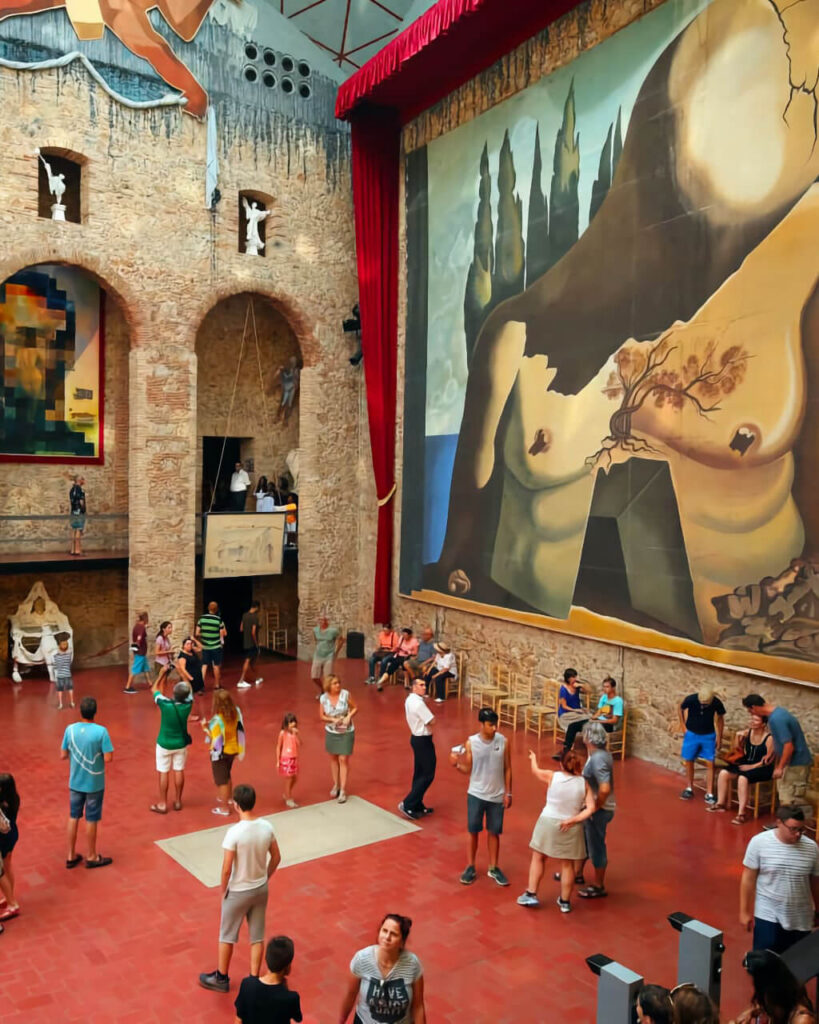
Museum of Salvador Dalí at Figueres city
Relax traveling to Figueres in the Van, Dalí considers his Museum there, his masterpiece. This is a place like no other in the world. There you will awaken your imagination and feel immersed in the dreamlike and boundless surrealist universe and mind of Salvador Dalí.
Dalí Theatre-Museum (Teatre-Museu Dalí, Figueres)
Conceived and designed by Salvador Dalí himself, the Dalí Theatre-Museum in Figueres is a surrealist masterpiece where reality and imagination merge. Built upon the ruins of the town’s former theatre, it stands as a vibrant self-portrait of the artist’s mind—playful, profound, and provocative.
Inside, every corridor, ceiling, and exhibit reveals Dalí’s obsession with illusion and eternity. From colossal installations to intimate sketches, visitors are invited into a dreamscape where art becomes theatre and the artist himself the eternal performer. The museum is not merely a collection—it is an experience, a journey into the boundless creativity that defined Dalí and continues to captivate the world.
After the guided orientation tour and the free time in the Museum, you will be transported to Girona City, in the first place, to have lunch. Girona is well known by its excellent gastronomy surprised.
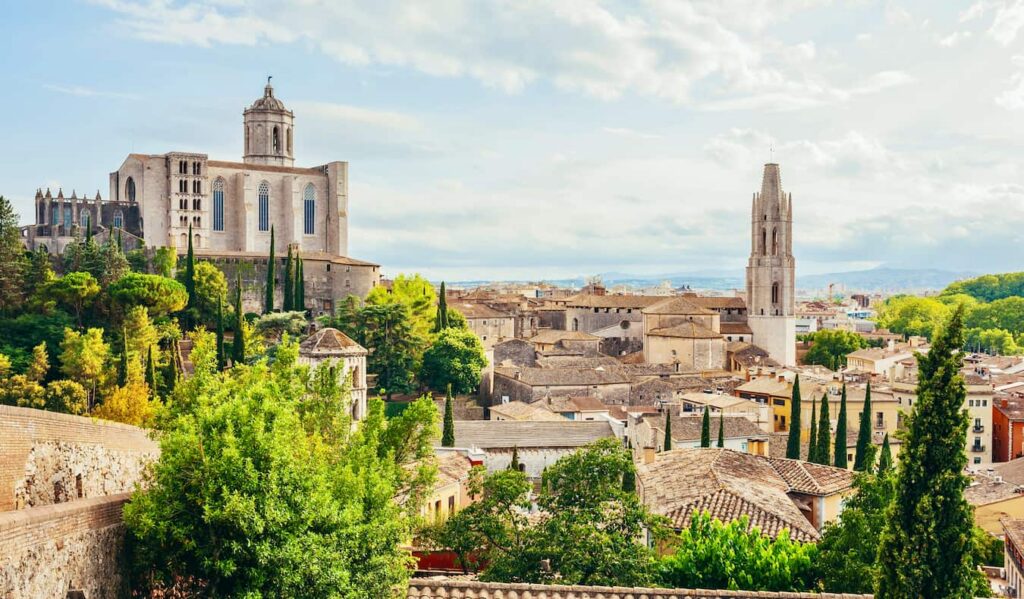
Walking tour (old quarter City of Girona)+ free time.
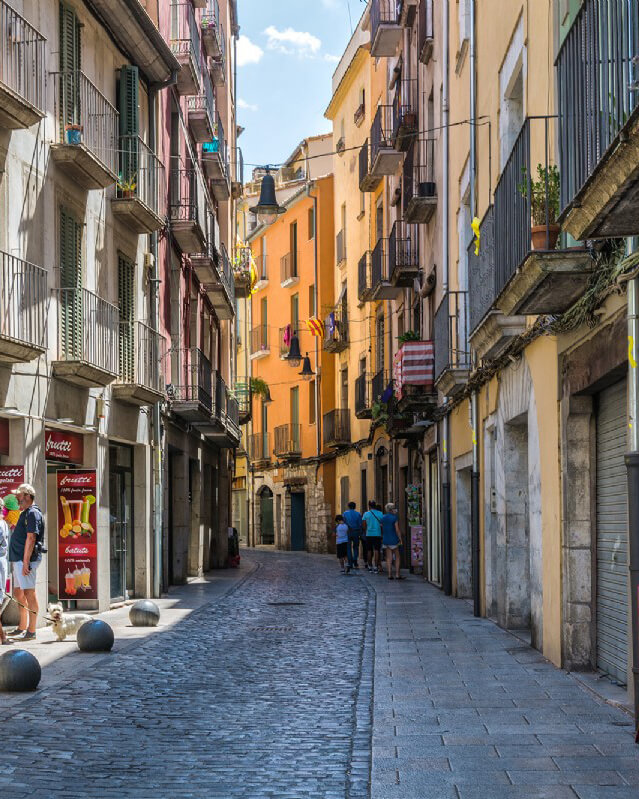
The 6th season of the show “Game of Thrones” was filmed in Girona, precisely for its enchanting medieval old town, with its four rivers and sixteen bridges. So, when discovering Medieval Europe, Girona will take you there, no question.
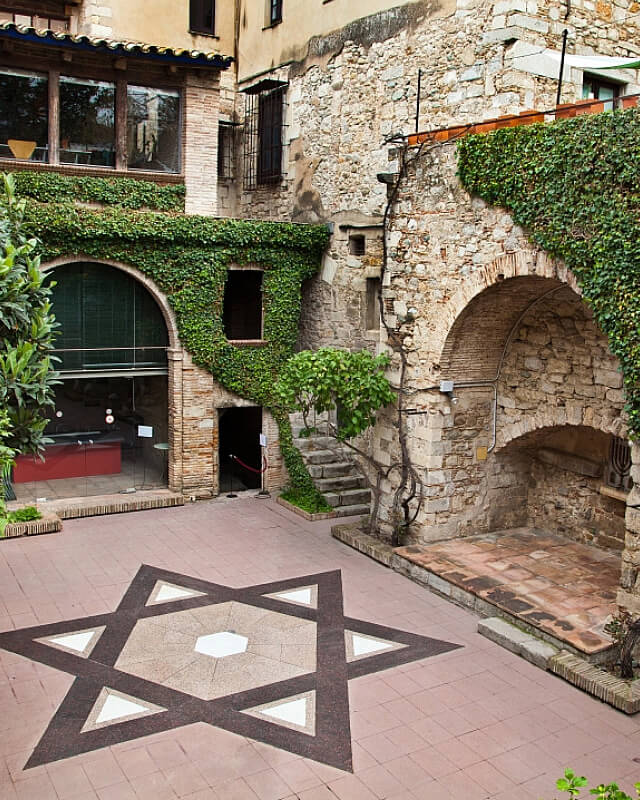
Jewish Quarter of Girona (El Call)
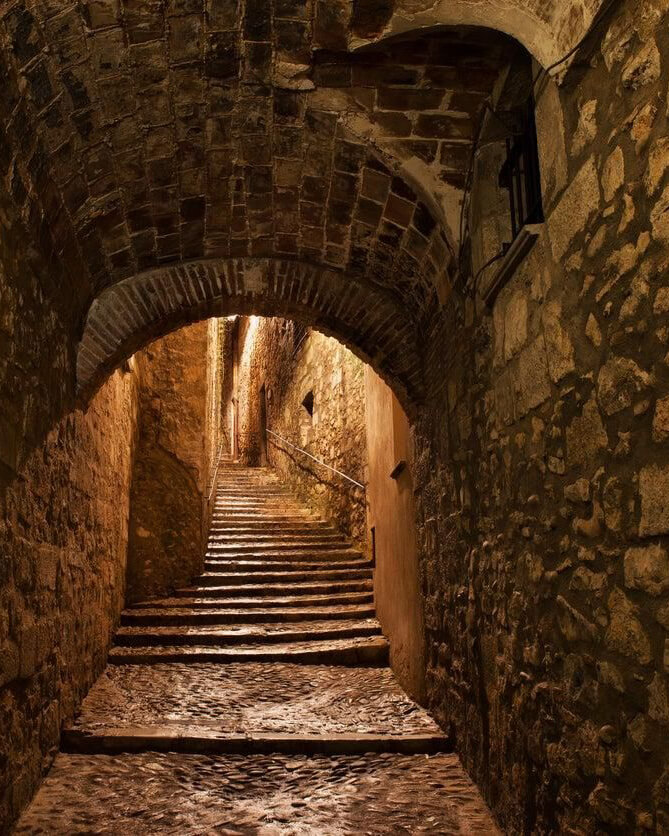
Tucked within Girona’s old town lies El Call, one of Europe’s best-preserved Jewish quarters, a labyrinth of narrow stone alleys that seem frozen in time. From the 12th to the 15th century, this neighborhood was a vibrant center of scholarship, mysticism, and trade, home to renowned rabbis and philosophers who shaped Jewish thought across the Mediterranean.
Today, the air still carries echoes of its history—hewn stairways, courtyards, and discreet doorways tell stories of coexistence, exile, and rediscovery. Exploring El Call is like stepping into a living manuscript of medieval Catalonia, where every stone recalls the brilliance and resilience of a lost world.
Girona Cathedral (Catedral de Santa Maria de Girona)
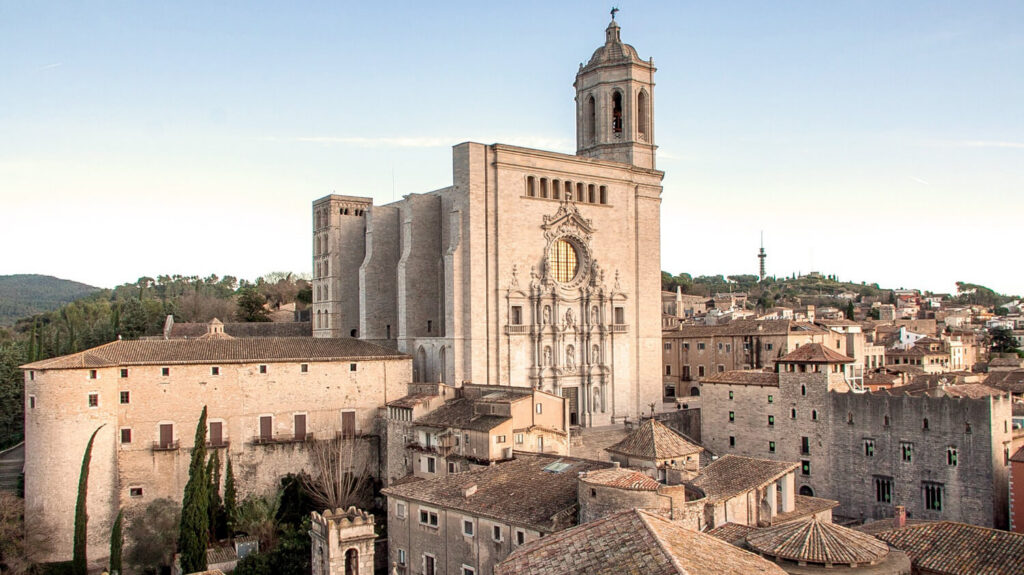
Dominating the skyline of Girona, the cathedral is both fortress and sanctuary, reflecting centuries of devotion and architectural ambition. Built between the 11th and 18th centuries, it harmoniously blends Romanesque foundations, Gothic majesty, and Baroque grandeur. Its nave—the widest Gothic nave in the world—creates an almost celestial space, designed to elevate the spirit toward light and divinity.
From its monumental staircase to its exquisite cloisters and tapestries, the cathedral is a mirror of Catalonia’s history: faith, resilience, and artistic mastery forged through time. Climbing its steps feels like a passage through centuries—each one a testament to human aspiration and the enduring beauty of belief.
Girona’s Medieval Walls
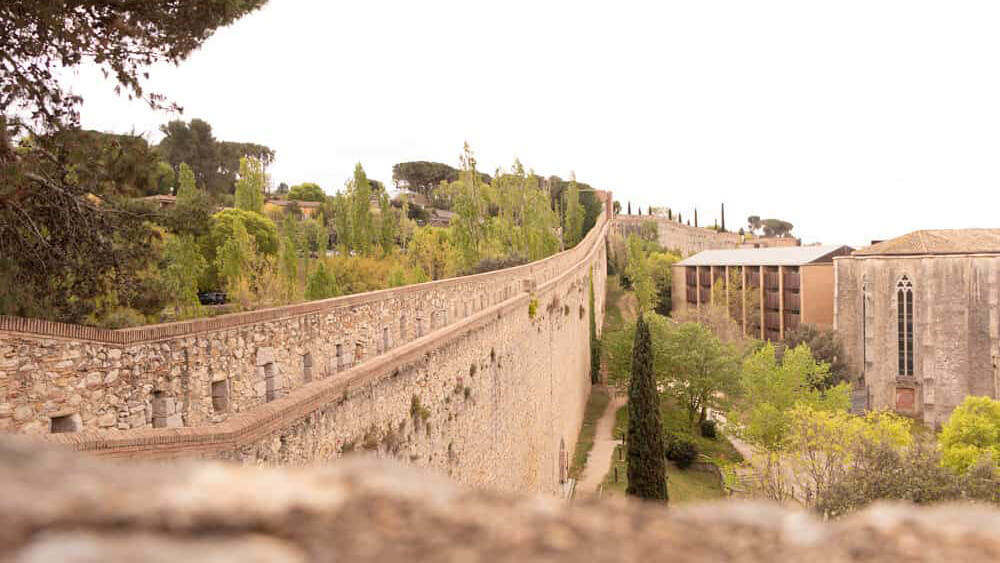
Stretching around the old city, Girona’s ancient walls date back to Roman times and were expanded in the Middle Ages to protect a thriving merchant town. Today, they offer one of the most spectacular walks in Catalonia—an elevated pathway overlooking the terracotta rooftops, the Onyar River, and the distant Pyrenees.
As you walk along the ramparts, history unfolds beneath your feet: towers, battlements, and secret passageways whispering tales of invasions, resilience, and rebirth. At sunset, when the golden light bathes the city, the Muralla becomes a living panorama—a dialogue between past and present, silence and story.
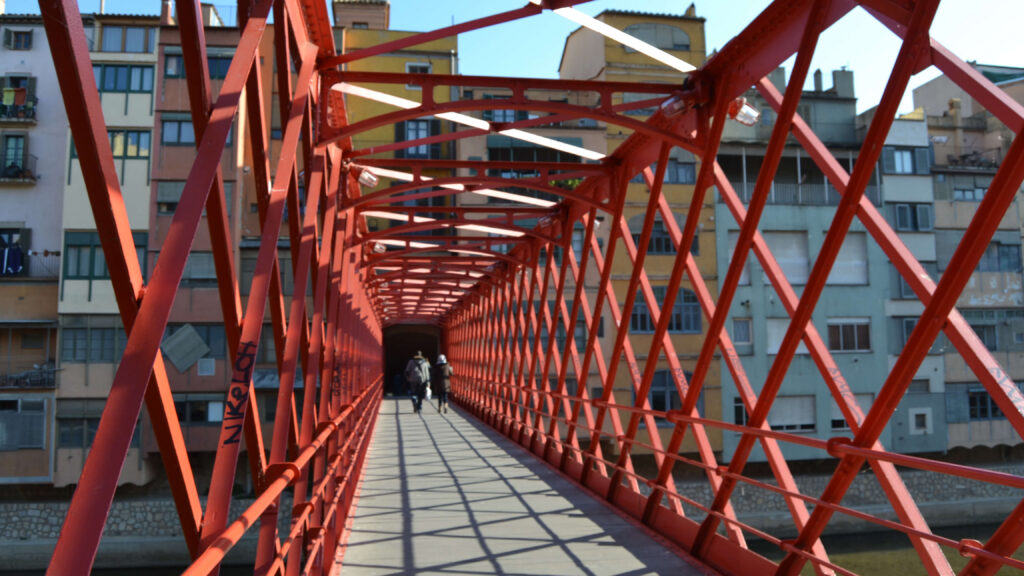
Eiffel Bridge
Designed by Gustave Eiffel before his famous Parisian tower, this striking red iron bridge was built in 1877, linking the medieval city with its expanding modern quarter. Its geometric structure contrasts beautifully with the colorful riverfront houses of Girona, creating one of the city’s most iconic views.
Crossing the bridge is both a literal and symbolic journey—from the weight of history to the promise of innovation. It represents Girona’s ability to embrace progress while preserving its timeless charm, a delicate balance that continues to define Catalan culture.
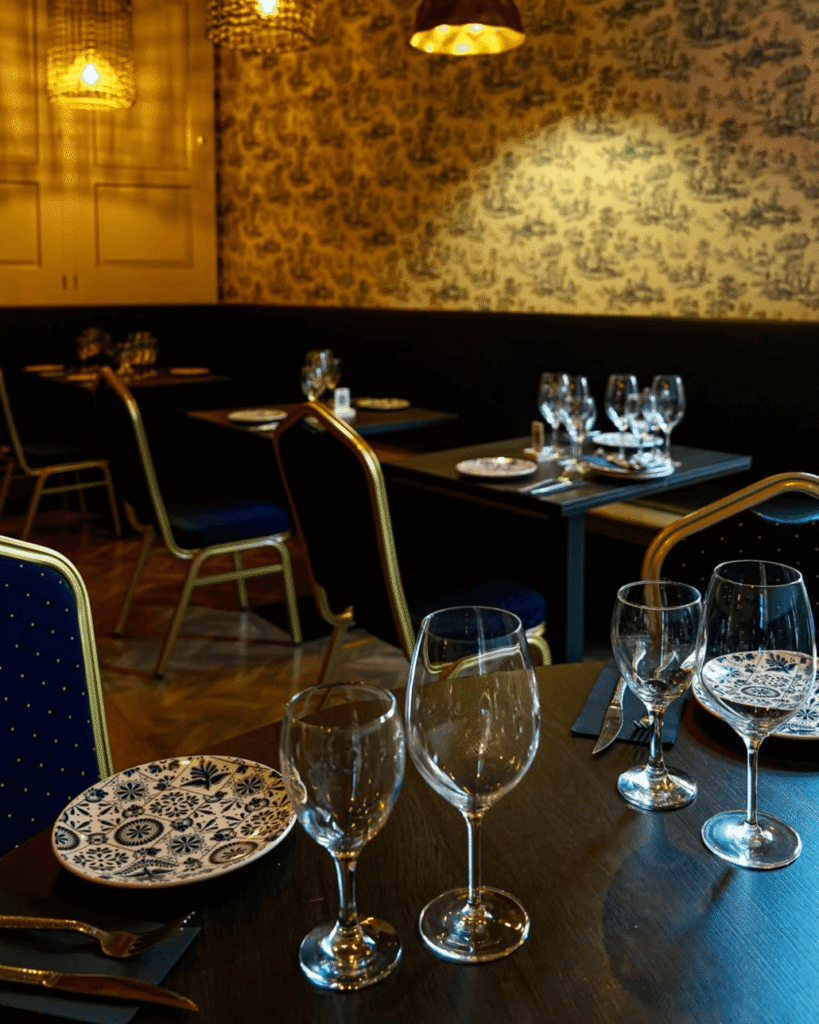
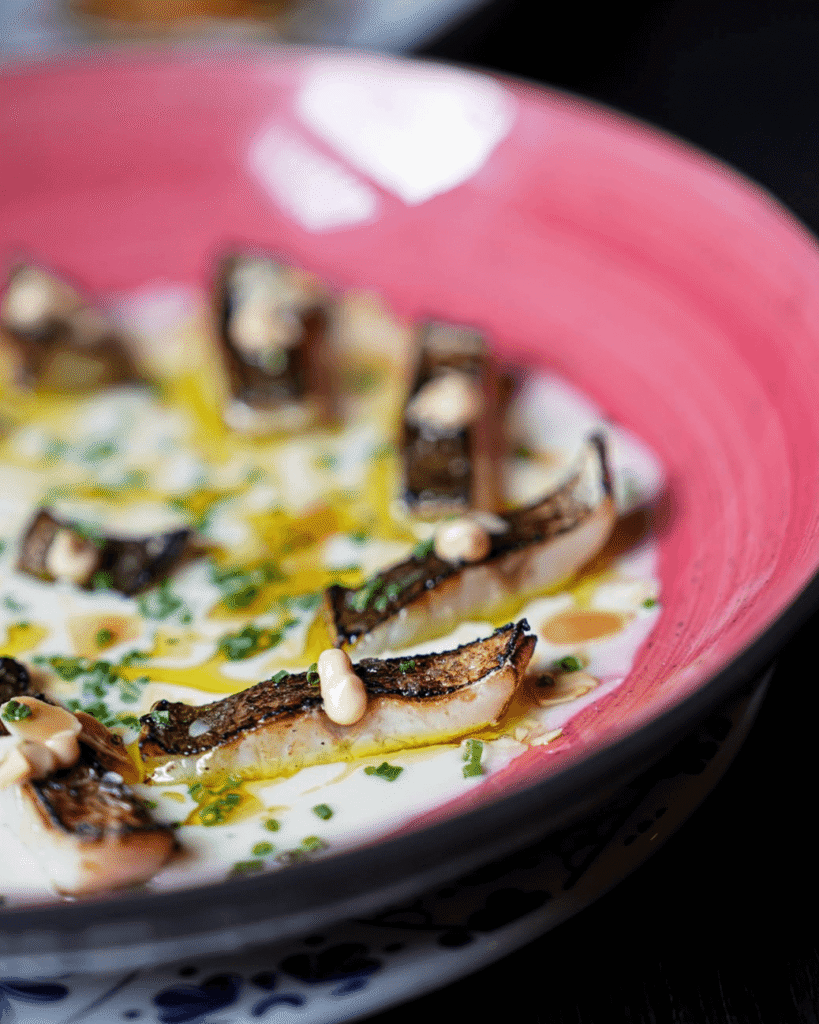
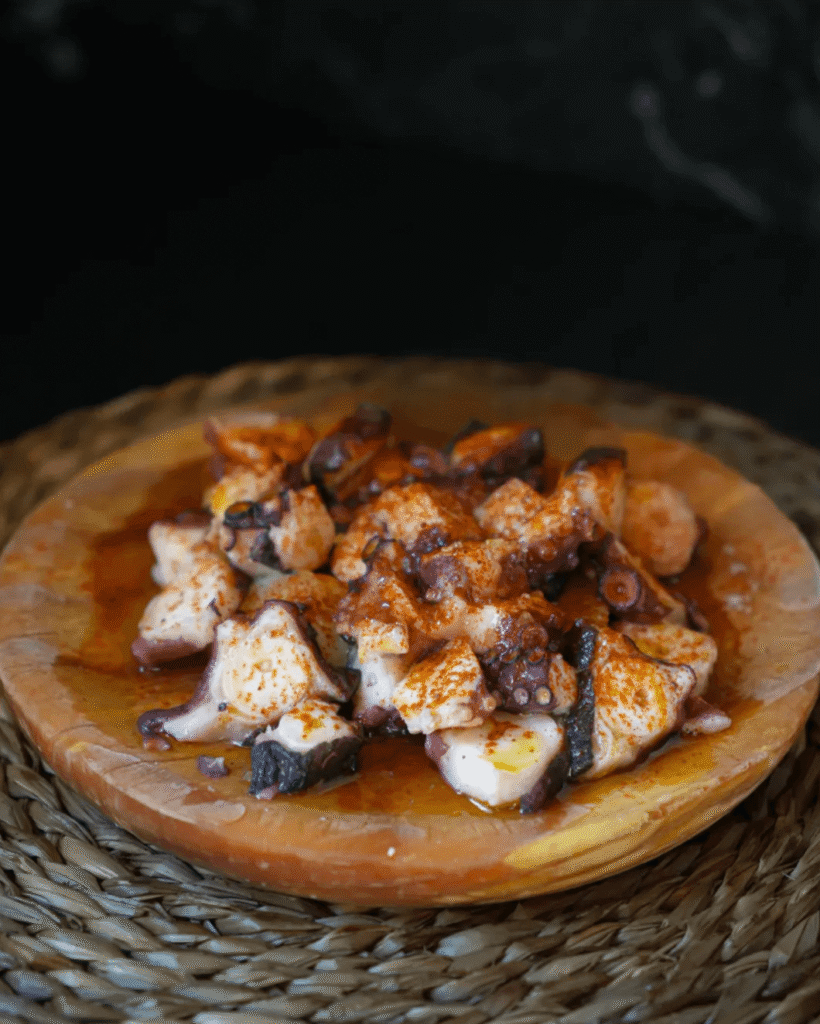
Dinner El Louro Restaurant
After a whole day of discovery, nothing better than a rich, healthy north of Spain cuisine dinner.
El Louro Restaurant is an elegant restaurant in the heart of Barcelona, known for reinterpreting Galician cuisine with Mediterranean ingredients. Ideal for ending your trip with a tasting menu of seasonal products, Galician wines, and first-class service.
Day 6
FREE DAY, a day for your own plans.
Fulfill your own expectations, return to the area of the city that you liked the best, do some shopping, pack your bags with cero rush, etc. And of course we are here to support you all the way so, we will take care of the tickets and reservations you may need for this day, according to your plans.
What we recommend:
-Barça experience, for football-soccer fans or Barça team followers.
-Visit the high-end outlet mall La Roca Village, with the best fashion brands at discounts of 30% to 60%,
-Els Encants Flee Market, find unique treasures in the biggest flee market of Barcelona etc.
-Poble Espanyol, the village that shows the whole of Spain.
-Stroll from the Arch of Triumph to the Park La Ciutadella.
–Joan Miró Museum.
-A walk through “Las Ramblas” of Poble Nou neighbourhood.
Talk to us, we’re here to guide you and answer all your questions.